Learn to cook / Outdoor cooking skills
Campfire heat zones
Quick answer
Bank embers into a hot zone, keep a thinner bed for gentle heat, and leave one edge clear. Move the pot between zones instead of fighting flames.
These steps assume
- Equipment stands securely on a non-combustible surface.
- Wind and fuel can change conditions during the process.
- The focus is “Campfire heat zones,” not a particular dish.
This is what it should look like
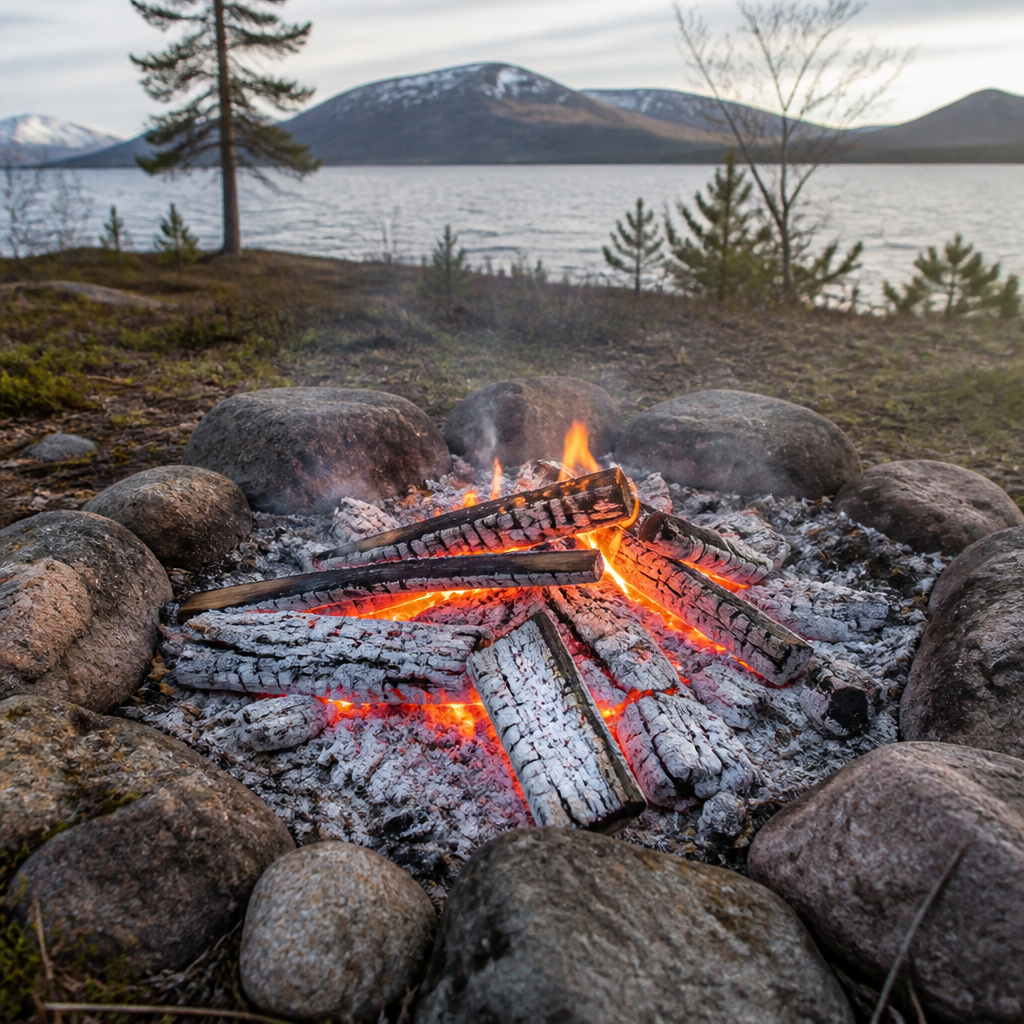
Campfire with glowing embers and a cooler outer edge for cooking
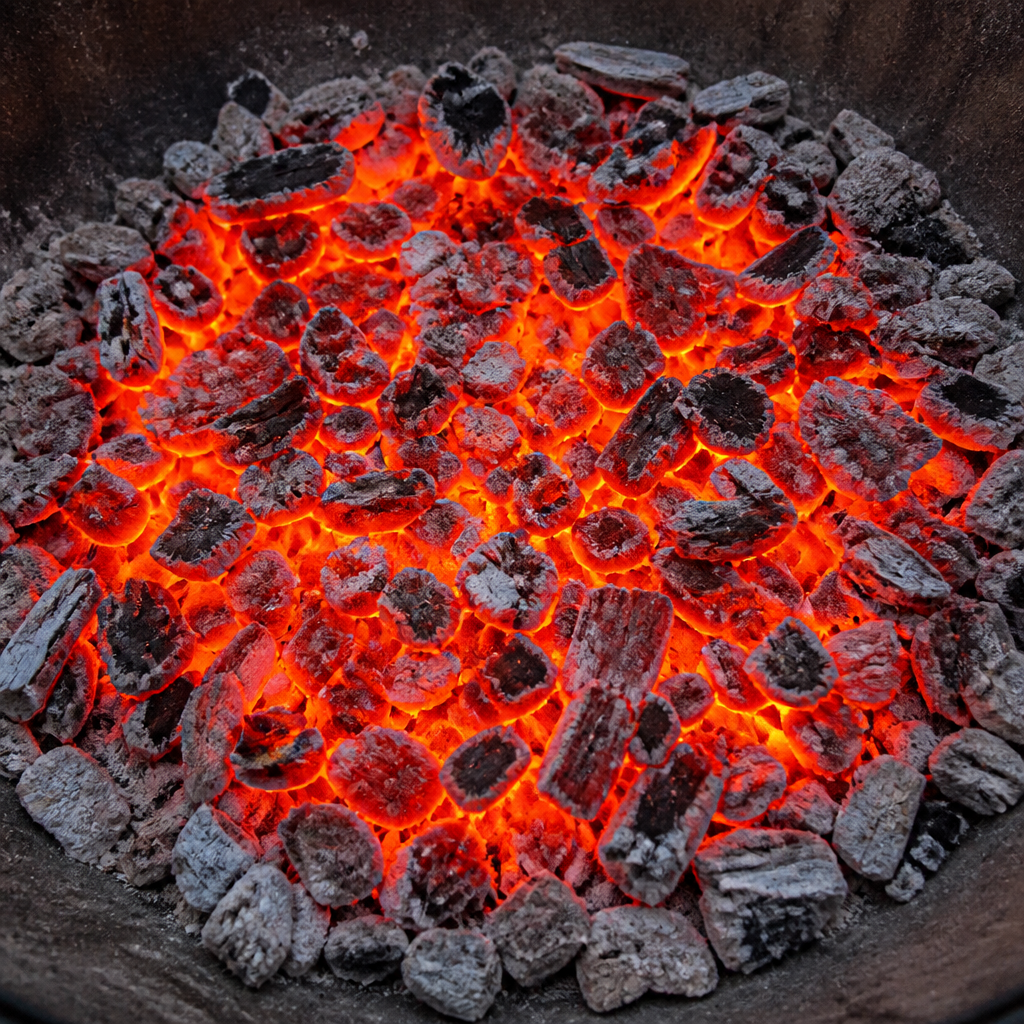
Close view of glowing hot coals ready for cooking
What you need
- Established fire site
- Dry wood in suitable sizes
- Long tongs or grill gloves
- Stable grate or pot hanger
- Plenty of water for extinguishing
Step by step
1
Let the wood burn down to a stable bed of red embers with gray ash.
- Equipment: Established fire site, Dry wood in suitable sizes.
- Heat: Even embers with no flames.
- Time: 8–12 minutes.
- Looks like: Heat is even and tall flames are gone.
- If it goes wrong: Cooking over fresh flames adds soot before heat becomes even.
- Done when: Complete: Heat is even and tall flames are gone.
2
Push most embers to one side, fewer to the middle, and clear a safe edge.
- Equipment: Established fire site, Dry wood in suitable sizes.
- Heat: Even embers with no flames.
- Time: 3–5 minutes.
- Looks like: Three distinct heat levels are apparent from a safe distance.
- If it goes wrong: Without a cool zone there is nowhere to stop cooking quickly.
- Done when: Complete: Three distinct heat levels are apparent from a safe distance.
3
Start over the suitable zone and move lower when the surface darkens or sizzling becomes harsh.
- Equipment: Established fire site, Dry wood in suitable sizes.
- Heat: Even embers with no flames.
- Time: Check every 2–3 minutes.
- Looks like: Cooking continues without black spots or flare-ups.
- If it goes wrong: Leaving food fixed ignores how quickly fire heat changes.
- Done when: Complete: Cooking continues without black spots or flare-ups.
If it doesn't turn out as expected
- Cooking over fresh flames adds soot before heat becomes even.
- Without a cool zone there is nowhere to stop cooking quickly.
- Leaving food fixed ignores how quickly fire heat changes.
Food safety
Use an established fire site, obey local restrictions, and keep extinguishing water ready. Never move burning wood with bare hands.
When it's done: Cooking continues without black spots or flare-ups.