How to fix sauce consistency
Quick answer
Too thick: whisk in a little warm liquid until the sauce coats a spoon. Too thin: simmer while stirring, or stir in a small extra roux (fat + flour). Avoid cold liquid and raw flour dumped into the finished sauce.
These steps assume
- The sauce is flour-thickened (roux, béchamel or brown gravy).
- The problem is thickness — not lumps alone (lumps have their own guide).
- Warm liquid matching the sauce base is ready.
- You re-season with salt after fixing consistency.
This is what it should look like
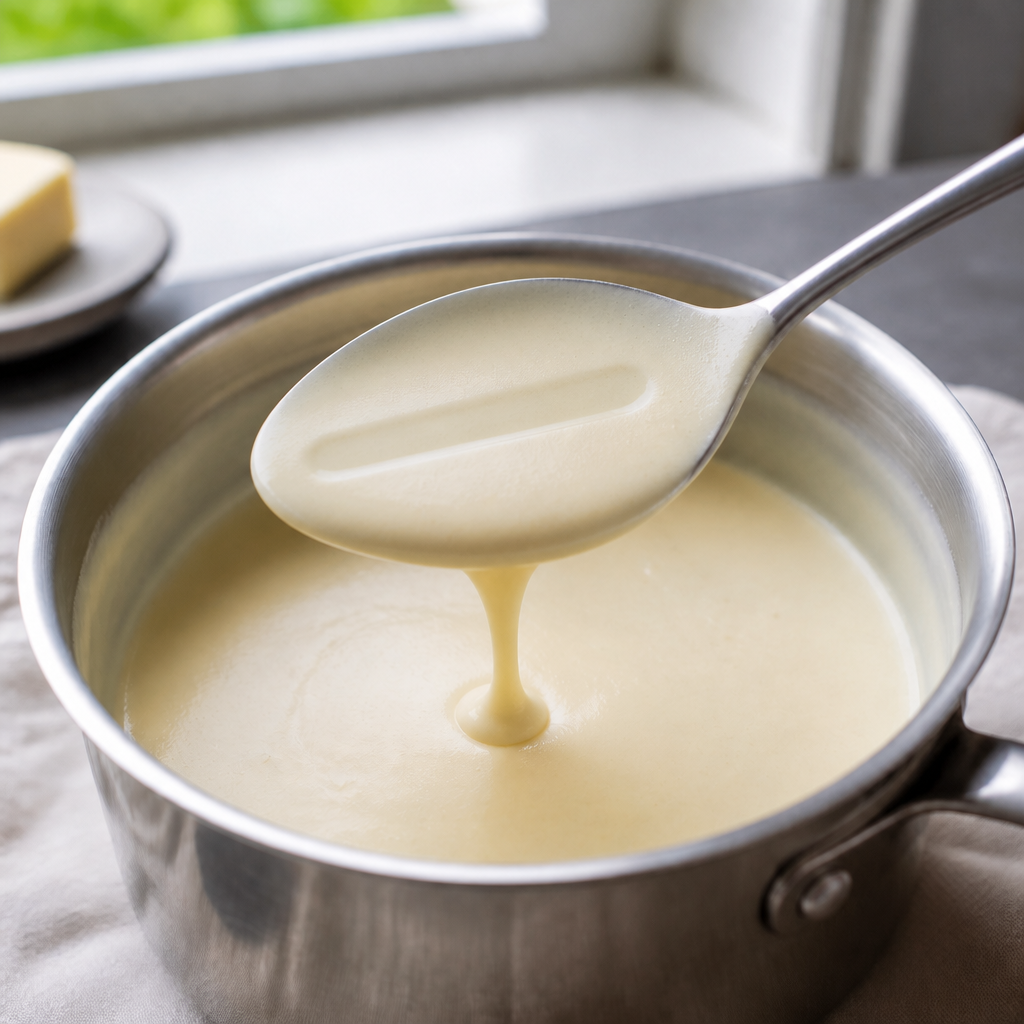
Sauce coats a spoon in an even film with a clear trail
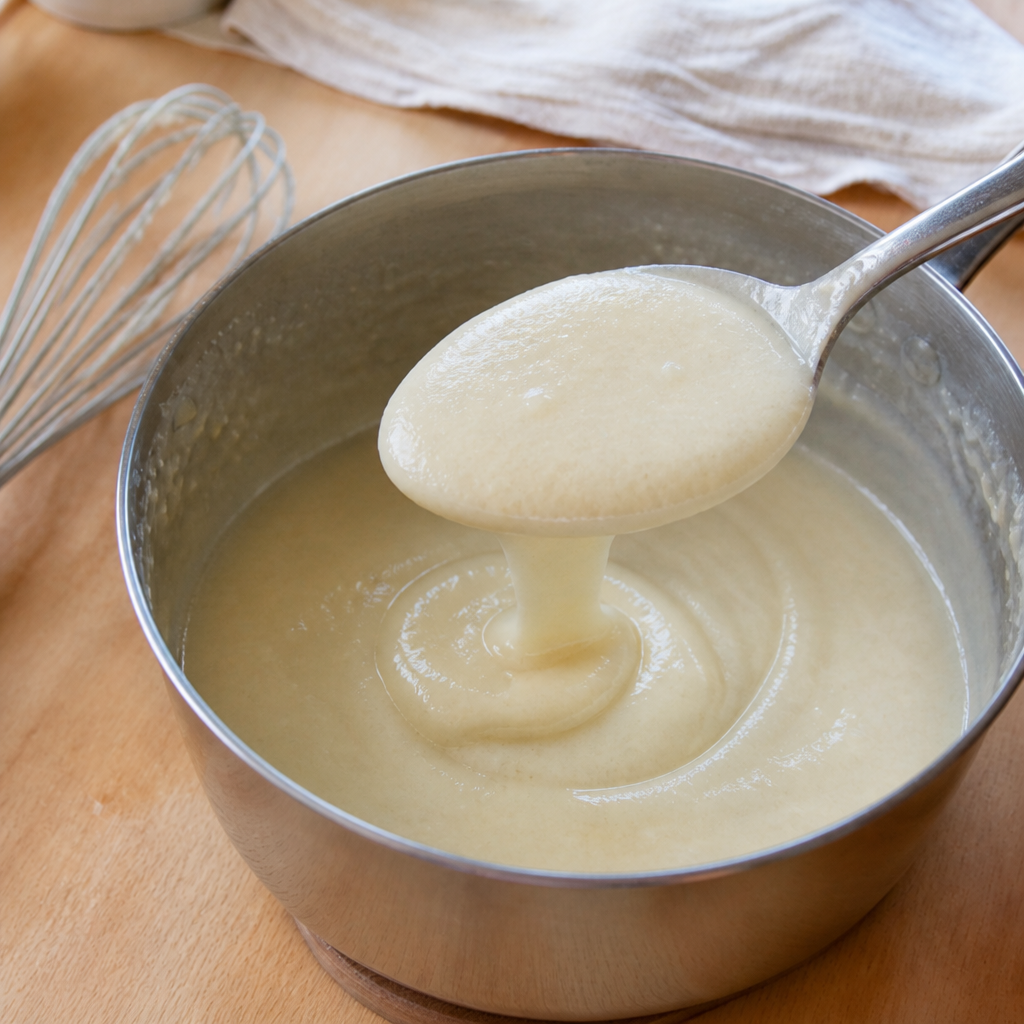
Sauce that is paste-thick and gluey on a spoon
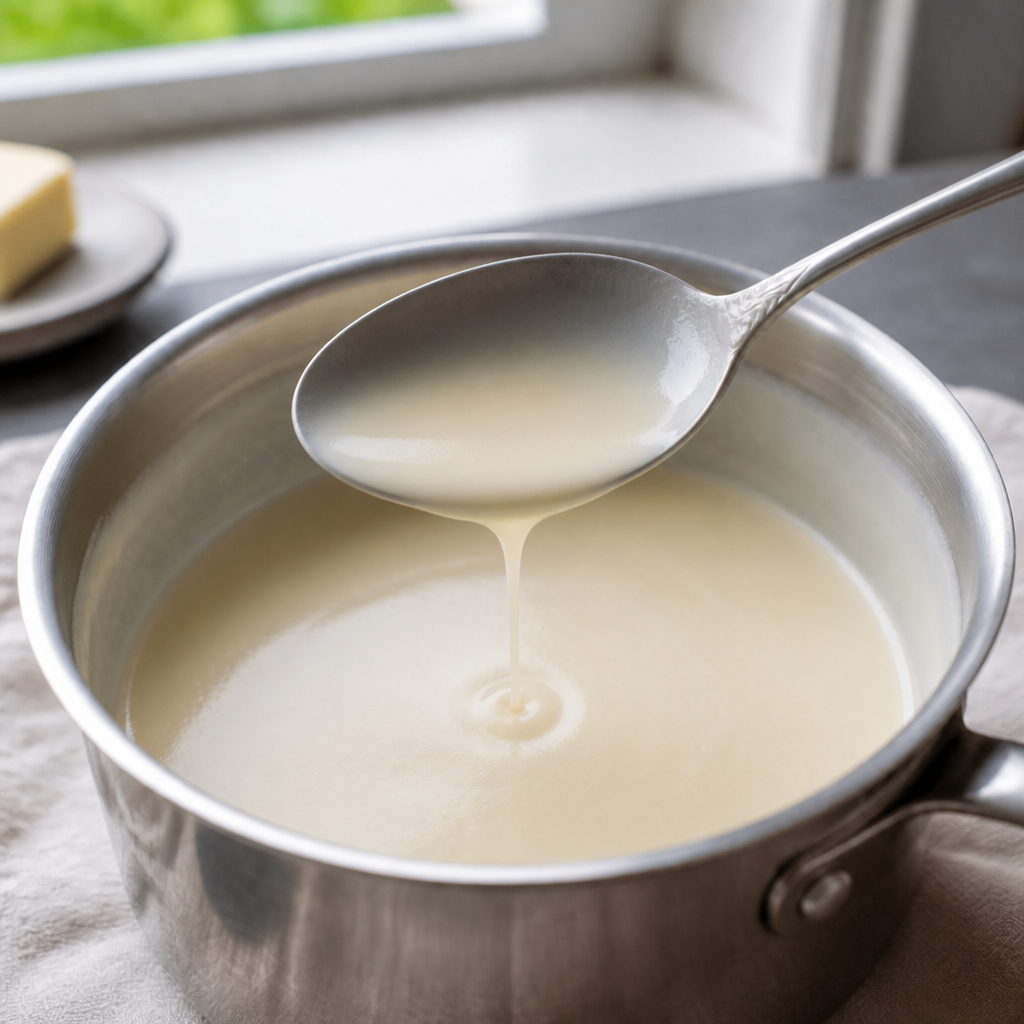
Sauce that is watery and runs off a spoon immediately
What you need
- Pan with the sauce
- Whisk
- Warm liquid (stock, milk or water — matching the sauce)
- Optional 1 tbsp fat + 1 tbsp flour for extra thickening
- Spoon to judge consistency
Step by step
1
Dip a spoon in the sauce and draw a finger across the back. Note: gluey thick, even film, or thin liquid.
- Equipment: Spoon.
- Heat: Sauce kept warm, not at a hard boil.
- Time: 30 seconds.
- Looks like: A correct sauce leaves an even film where the finger trail shows clearly.
- If it goes wrong: Unsure reading — compare whether the sauce drips in thick blobs or thin streams.
- Done when: You know whether the sauce is too thick, too thin or already correct.
2
If too thick: take off the hardest heat and whisk in 1–2 tbsp warm liquid at a time until the consistency is right.
- Equipment: Whisk and warm liquid.
- Heat: Low heat.
- Time: 1–3 minutes.
- Looks like: Sauce becomes glossy again and coats the spoon without standing like a paste.
- If it goes wrong: Cold liquid caused lumps — use only warm liquid and whisk hard.
- Done when: Too-thick sauce is thinned to spoon consistency — or you move to the next step.
3
If too thin: simmer while stirring for 3–5 minutes so liquid evaporates before adding more thickener.
- Equipment: Spoon or whisk.
- Heat: Low to medium — gentle simmer.
- Time: 3–5 minutes.
- Looks like: Sauce tightens slightly and looks glossier; the base must not scorch.
- If it goes wrong: Base scorches — lower heat, change pans without scraping the burnt layer.
- Done when: Sauce is thicker from simmering — or still too thin and ready for extra thickener.
4
If still too thin: cook 1 tbsp fat with 1 tbsp flour for 1 minute in a small pan, whisk in a little sauce, then stir the mixture back into the main sauce. Simmer 2 minutes. Re-season.
- Equipment: Small pan and whisk.
- Heat: Medium for the small roux; low simmer in the main sauce.
- Time: 3–4 minutes total.
- Looks like: Sauce coats the spoon; flavour is still of sauce, not raw flour.
- If it goes wrong: Raw flour dumped into the sauce made lumps — always cook a small roux first.
- Done when: Consistency is fixed and the sauce is re-seasoned.
If it doesn't turn out as expected
Thinning with cold liquid
causes lumps; use warm liquid.
Flour sprinkled straight in
lumps; cook a small roux first.
Hard boil while thickening
base scorches; keep a gentle simmer.
Salt missing after adjustment
thinning and extra thickener need re-seasoning.
Food safety
Hot sauce can splash when whisked hard. Keep the pan steady.
When it's done: The sauce coats the back of a spoon in an even film without being gluey or watery.