Learn to cook / Basic pan skills
How to cook chicken breast in a pan
Quick answer
Pound to even thickness, salt it, and cook in 1 tbsp oil over medium heat 5–7 minutes per side. Check 74 °C / 165 °F in the centre. Rest 3–5 minutes before slicing.
These steps assume
- Meat is pounded to even thickness (about 1.5–2 cm) so it cooks evenly.
- Temperature is always checked in the thickest part — not time alone.
- The goal is chicken cooked through at 74 °C / 165 °F, not a pink centre.
- The pan is large enough that breasts are not stacked.
This is what it should look like
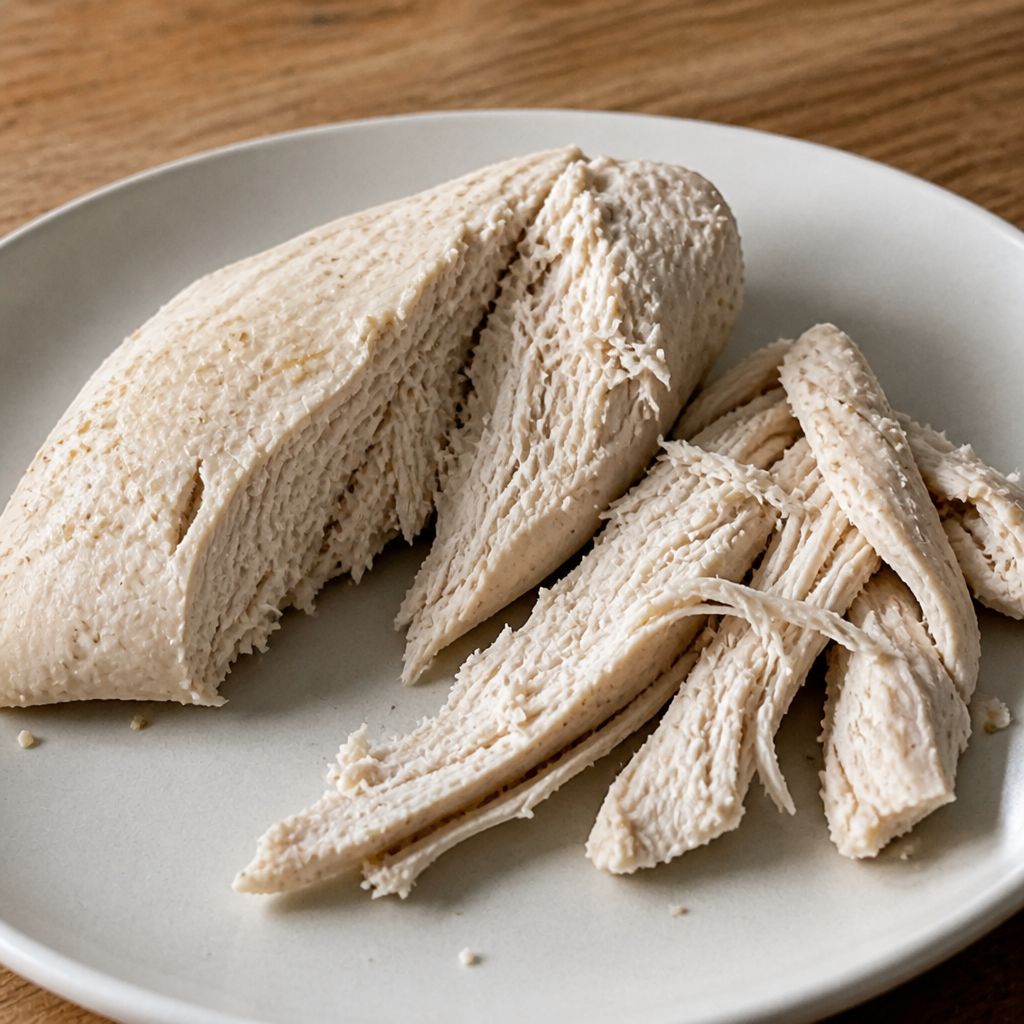
Overcooked dry chicken breast with stringy white fibres
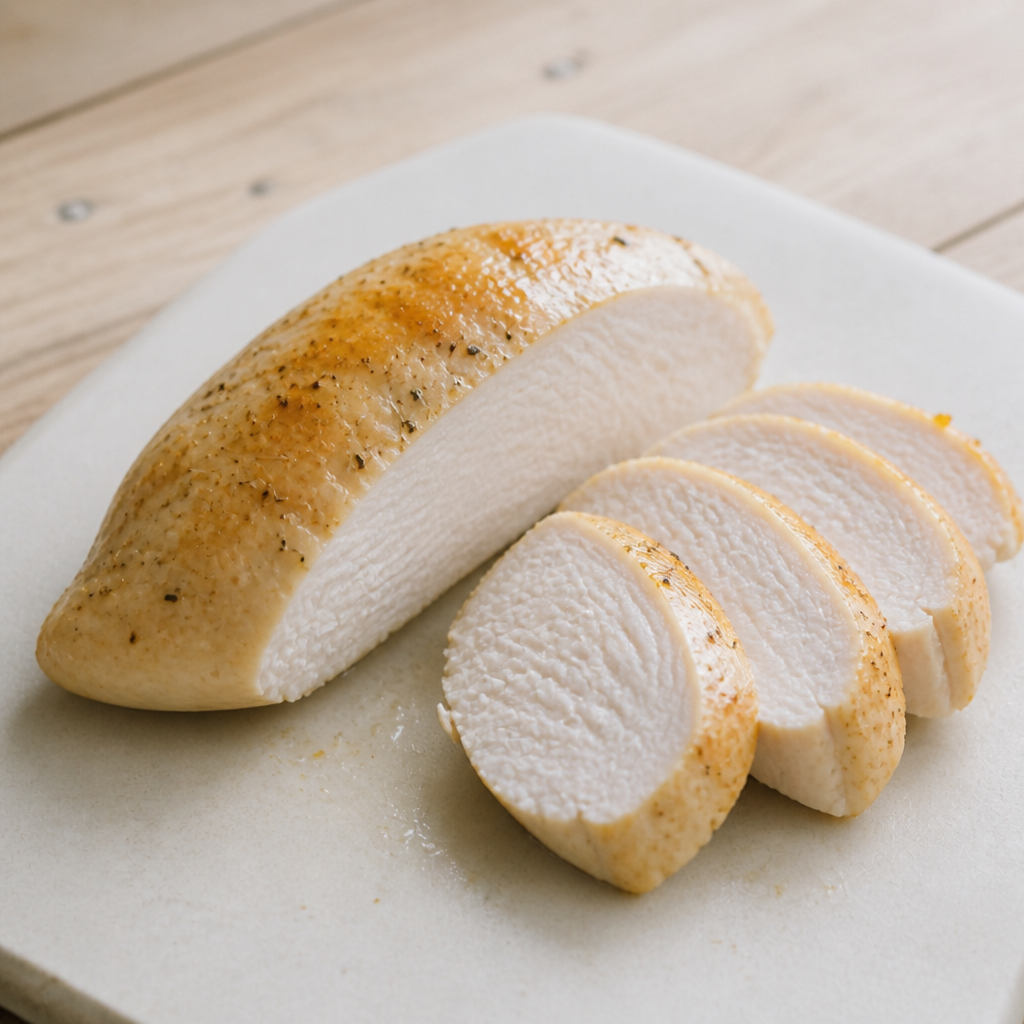
Cooked chicken breast sliced open — opaque white, moist fibres
What you need
- Chicken breast
- Oil
- Thermometer
- Frying pan
Step by step
1
Place the breast between baking paper and pound to even thickness. Pat dry and salt both sides.
- Equipment: Baking paper and meat mallet or heavy pan.
- Heat: No heat.
- Time: 2–3 minutes.
- Looks like: Thickness is even; surface is dry, not glossy-wet.
- If it goes wrong: Very uneven thickness — pound the thick ends more; otherwise the centre stays raw while the edge dries.
- Done when: Meat is even, dry and salted.
2
Heat the oil, add the breast and cook without moving it until the underside is golden brown.
- Equipment: Frying pan and spatula.
- Heat: Medium heat.
- Time: 5–7 minutes.
- Looks like: Underside is golden brown; meat releases from the pan without tearing.
- If it goes wrong: Black crust too fast — lower heat; the centre is still cold.
- Done when: First side is browned; ready to flip.
3
Flip the breast and cook the second side. Insert the thermometer into the thickest part without touching the pan.
- Equipment: Spatula and meat thermometer.
- Heat: Medium heat; lower slightly if the crust darkens too fast.
- Time: 5–7 minutes, or until 74 °C / 165 °F.
- Looks like: Thermometer reads at least 74 °C / 165 °F; juices run clear at a small cut.
- If it goes wrong: Below 74 °C / 165 °F — keep cooking and check every minute. Never serve undercooked chicken.
- Done when: Chicken has reached 74 °C / 165 °F and is ready to rest.
4
Move the meat to a clean plate and rest 3–5 minutes. Slice on the diagonal only after that.
- Equipment: Clean plate and knife.
- Heat: Off — residual heat in the meat only.
- Time: 3–5 minutes.
- Looks like: Juices redistribute in the meat; the cut face is evenly light with no raw pink centre.
- If it goes wrong: Sliced too early — juices run out and meat seems dry; rest longer next time.
- Done when: Safely cooked-through, juicy chicken breast ready to serve.
If it doesn't turn out as expected
Below 74 °C / 165 °F
keep cooking; colour and juices alone are not safe signs.
Dry meat
heat too high or too long after target temperature; rest and pound thick pieces more evenly next time.
Raw centre despite brown crust
uneven thickness or start heat too high; pound evenly and use a thermometer.
Meat sticks
pan too cold or meat wet; dry it and wait until it releases.
Food safety
Always 74 °C / 165 °F in the thickest part. Wash hands and board after raw chicken. Do not reuse the raw-meat plate for cooked meat.
When it's done: Core temperature is at least 74 °C / 165 °F, the meat is juicy, and the juices run clear — not pink.