Comment rattraper une sauce grumeleuse
Réponse courte
Take la poêle off the heat and whisk hard. Strain through a fine sieve if lumps remain. Start again with a fresh roux if the sauce tastes burnt or of farine crue.
Valable quand
- The sauce is flour-thickened and has visible lumps.
- The sauce is recoverable if it does not taste burnt and the lumps are soft.
- Restart if the base has scorched, the flavor is bitter, or large pockets of raw flour persist.
À quoi ça doit ressembler
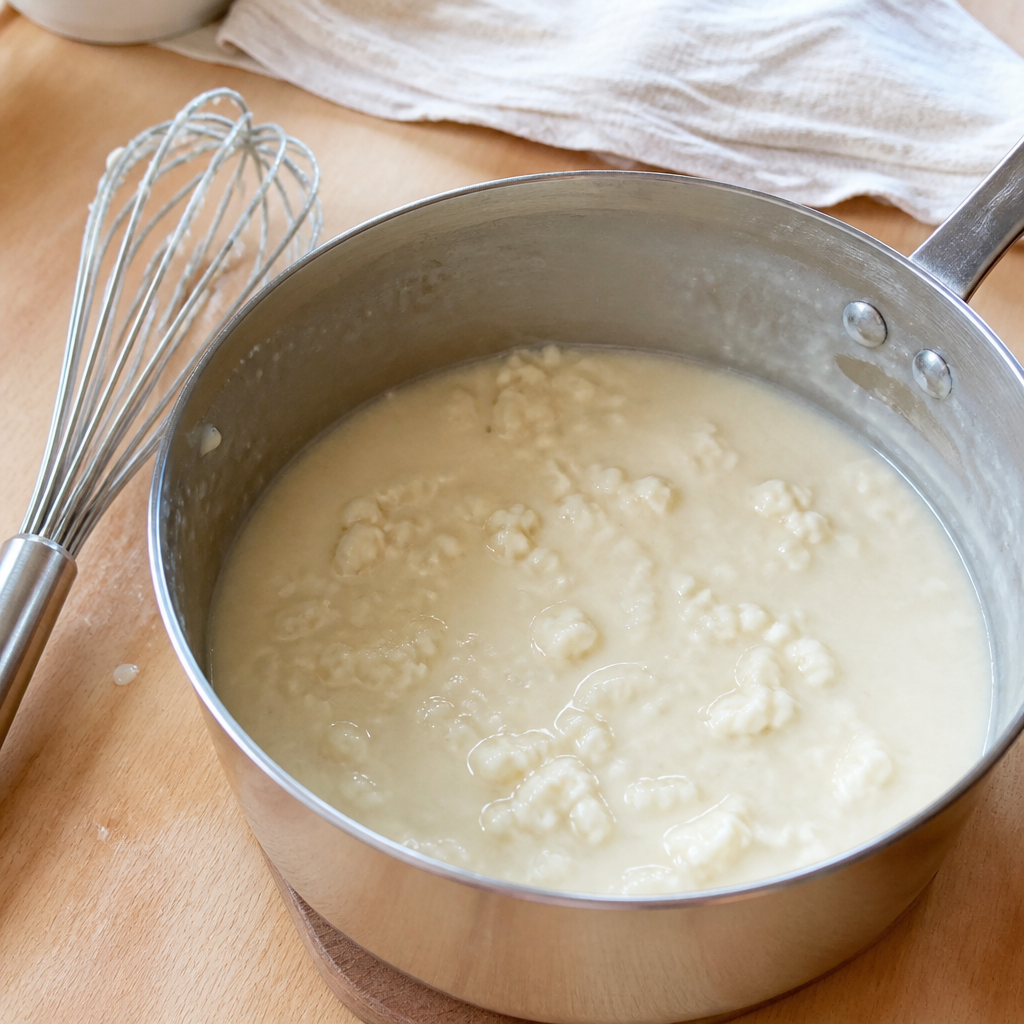
Lumpy sauce with visible pale flour lumps
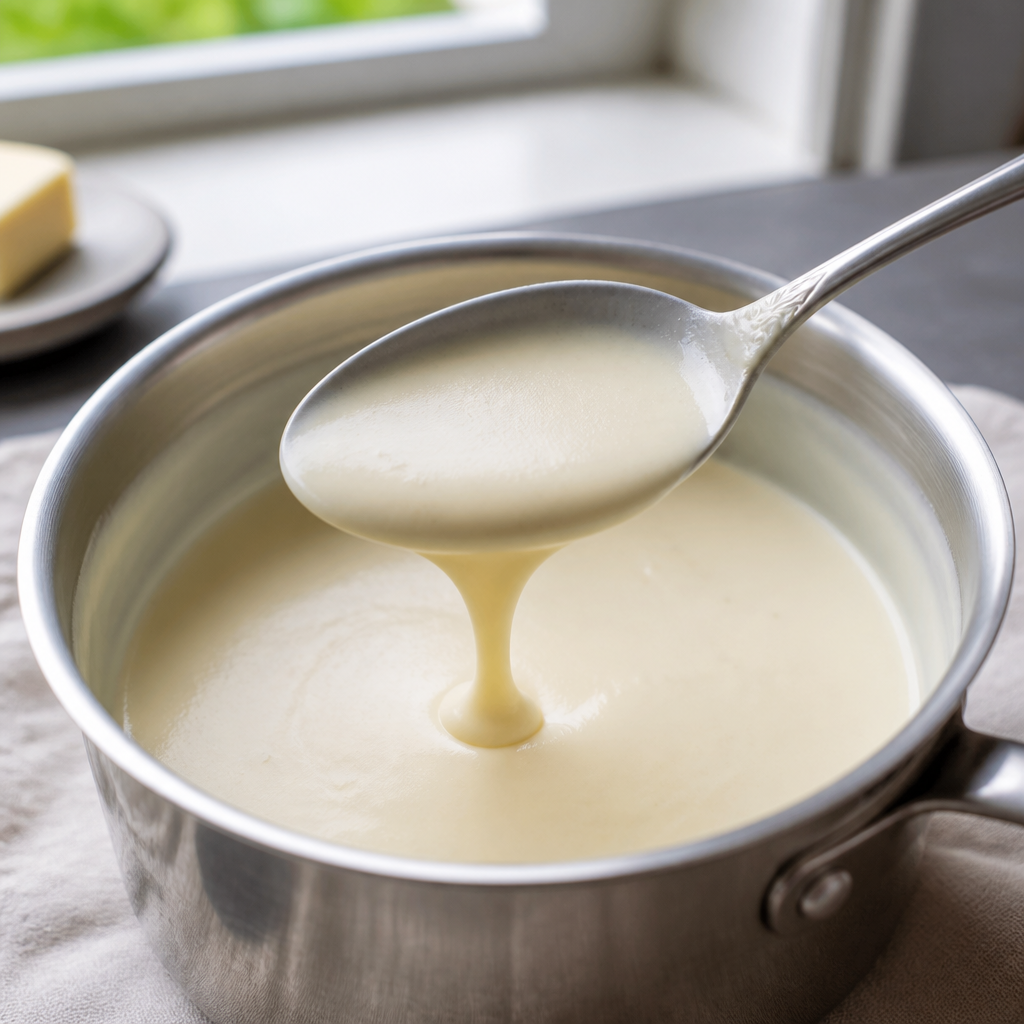
Smooth sauce after rescue, coating the back of a spoon
Ce qu'il te faut
- Pan with the lumpy sauce
- Whisk
- Fine sieve
- Clean pan or bowl for the strained sauce
- Fresh roux if the sauce cannot be rescued
Étape par étape
1
Take the pan off the heat. Inspect the lumps, smell the sauce and carefully taste a cooled drop.
- Matériel: Spoon and a cool plate for the taste test.
- Chaleur: No heat.
- Temps: About 1 minute.
- Aspect: Soft, pale lumps without a burnt smell are recoverable. Black flecks, bitter flavor or a scorched base are not.
- Si ça tourne mal: Burnt smell or bitter taste — do not scrape up the base; carefully pour off the unburnt portion or restart.
- Prêt quand: The sauce is identified as recoverable or better replaced.
2
Whisk the sauce vigorously from the center toward the sides while the pan stays off the heat.
- Matériel: Whisk.
- Chaleur: No heat during the rescue.
- Temps: 30–60 seconds.
- Aspect: The lumps shrink and the sauce runs evenly from the whisk.
- Si ça tourne mal: The sauce becomes very thick — whisk in 1 tbsp warm liquid at a time, but only once it is nearly smooth.
- Prêt quand: The sauce is smooth or only a few soft lumps remain.
3
Pour the sauce through a fine sieve into a clean pan. Press soft lumps gently with the back of a spoon; discard firm residue.
- Matériel: Fine sieve, spoon and clean pan.
- Chaleur: No heat.
- Temps: 1–2 minutes.
- Aspect: The strained sauce is even and coats a spoon without grainy bits.
- Si ça tourne mal: Large, firm flour lumps fill the sieve — discard them; do not whisk them back into the sauce.
- Prêt quand: The sauce is strained and free of visible lumps.
4
Warm the rescued sauce gently. If raw flour flavor, bitterness or firm lumps remain, make a fresh roux and whisk in the liquid gradually.
- Matériel: Clean pan and whisk; ingredients for a fresh roux if needed.
- Chaleur: Low heat for reheating; medium heat for a fresh roux.
- Temps: 2–3 minutes to check; longer for a fresh roux.
- Aspect: The rescued sauce is smooth and tastes clean. A fresh roux is light blond and receives the liquid a little at a time.
- Si ça tourne mal: Lumps return — take off the heat, stop adding liquid and whisk completely smooth before the next addition.
- Prêt quand: The sauce is smooth and clean-tasting, or it has been replaced with a lump-free fresh roux.
Si ce n'est pas comme prévu
Small, soft lumps
take the pan off the heat and whisk hard from the center outward.
Lumps remain after whisking
strain the sauce through a fine sieve into a clean pan.
Raw flour flavor
make a fresh roux, cook the flour for 1–2 minutes and gradually whisk in the old liquid.
Burnt or bitter flavor
discard the scorched portion; whisking or straining cannot remove the taste.
Lumps return whenever liquid is added
work off heat, add a little at a time and whisk smooth between additions.
Sécurité alimentaire
Keep la poêle steady and pour hot sauce through the sieve away from your hands and face.
C'est prêt quand: The sauce is smooth with no visible flour lumps and tastes neither burnt nor of farine crue.