How to make brown gravy
Quick answer
Make a light to medium-brown roux from about 25 g fat and 25 g flour. Whisk in 400–500 ml warm stock or water with drippings. Simmer 5–8 minutes until the gravy is glossy and smooth.
These steps assume
- Fat and flour are about 1:1 by weight for the roux.
- Liquid is warm before it is whisked in.
- Drippings, onion or stock provide flavour — otherwise the gravy tastes flat.
- The goal is a smooth, glossy brown gravy that coats a spoon.
This is what it should look like
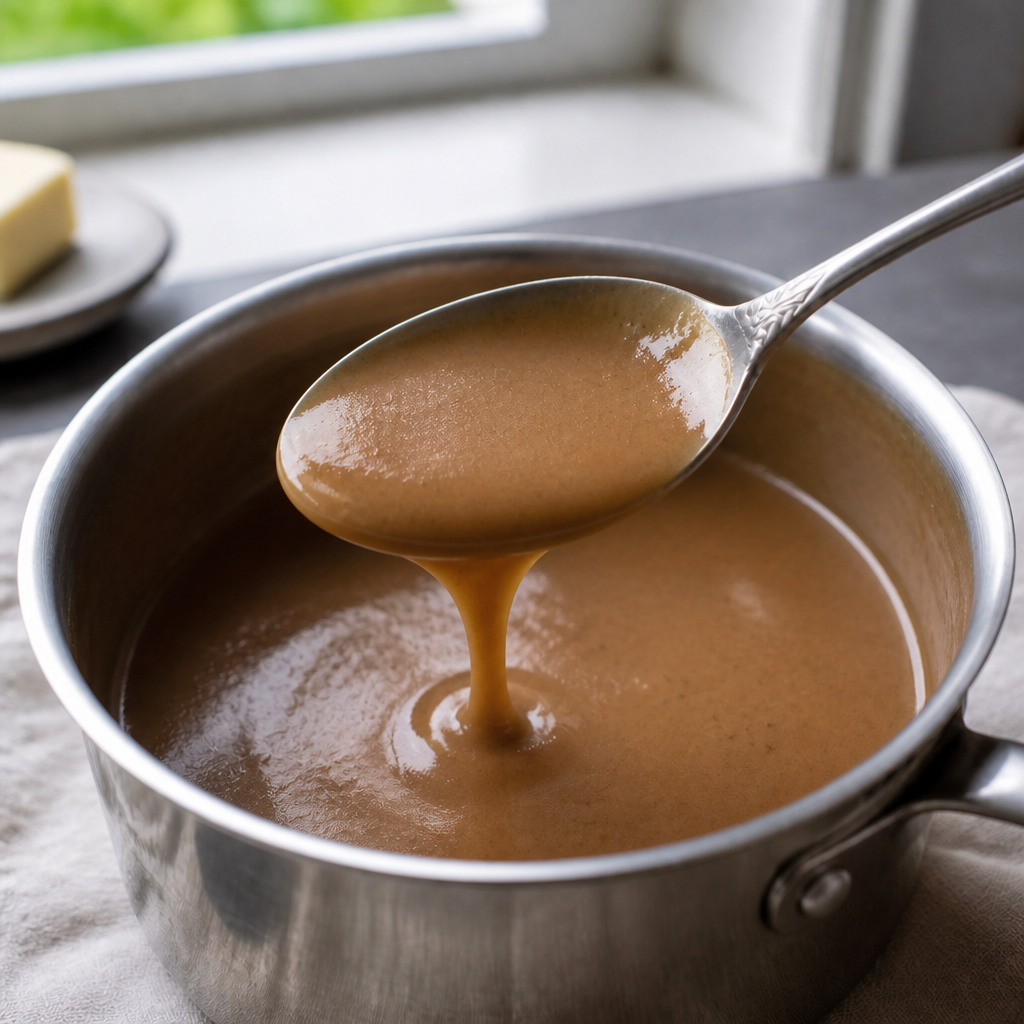
Smooth brown gravy coating the back of a spoon
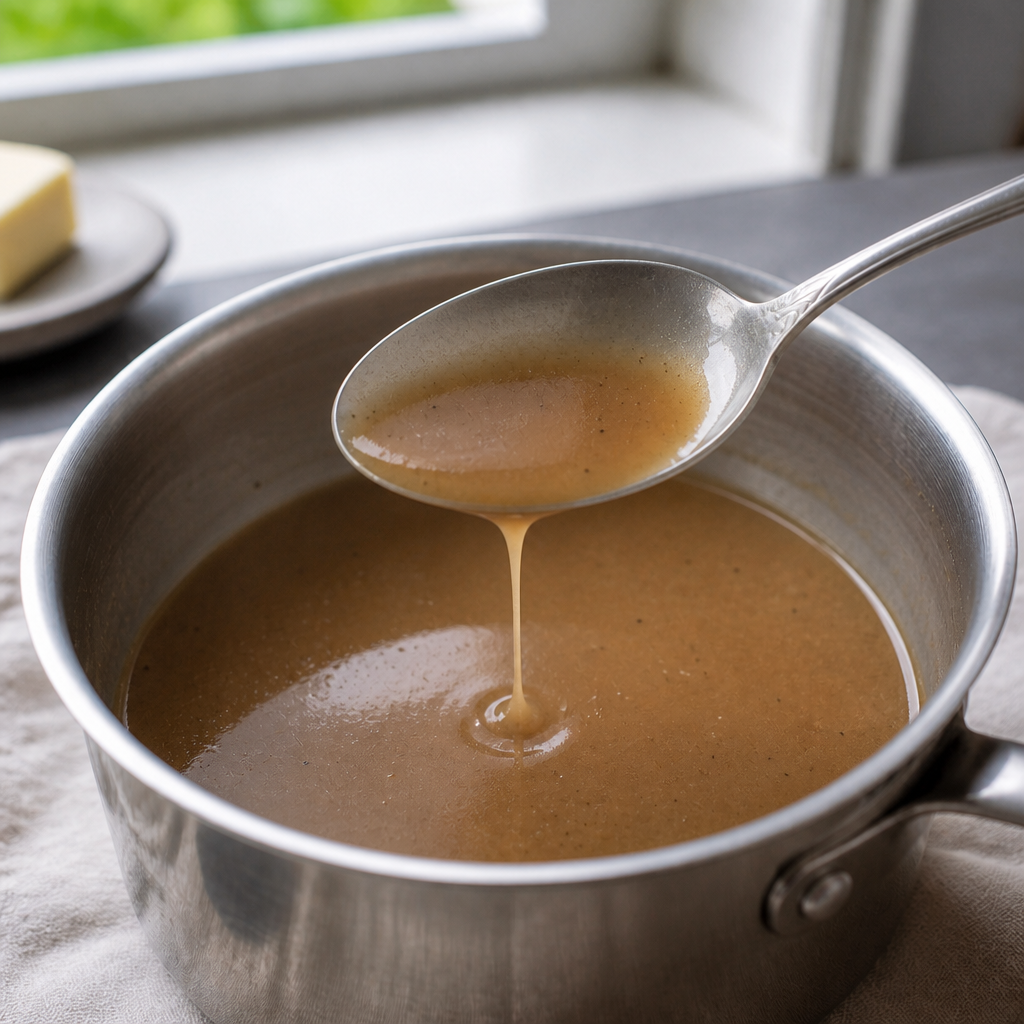
Thin watery brown gravy that does not coat a spoon
What you need
- About 25 g butter, dripping or oil
- About 25 g all-purpose flour
- 400–500 ml warm stock, broth or water with pan drippings
- Saucepan or frying pan
- Whisk
- Spoon for tasting
Step by step
1
Scrape drippings and brown bits free in the pan. Pour off excess fat so about 25 g remains — or add butter.
- Equipment: Frying pan or saucepan and spoon.
- Heat: Medium heat.
- Time: 1–2 minutes.
- Looks like: The brown bits are loosened; the fat is hot without smoking.
- If it goes wrong: Black, bitter bits — do not scrape them in; start with clean fat and stock instead.
- Done when: About 25 g fat with loosened drippings is ready for flour.
2
Sprinkle in the flour and whisk constantly until the paste is smooth and light to medium brown with a nutty smell.
- Equipment: Whisk.
- Heat: Medium heat.
- Time: 2–4 minutes.
- Looks like: The roux is even, with no dry flour, and blond to medium brown — not black.
- If it goes wrong: Dark spots or burnt smell — start again; a bitter roux ruins the gravy.
- Done when: The roux is ready for warm liquid.
3
Add the warm liquid a little at a time while whisking hard until smooth. Add the rest and bring to a gentle boil.
- Equipment: Whisk and measuring jug.
- Heat: Medium heat.
- Time: 2–3 minutes.
- Looks like: No visible flour lumps; the gravy is thinner than finished but even.
- If it goes wrong: Lumps — take off heat, whisk hard or strain; add liquid more slowly next time.
- Done when: The liquid is incorporated without large lumps.
4
Simmer the gravy, stirring, until glossy and coating a spoon. Season with salt and pepper.
- Equipment: Spoon.
- Heat: Low to medium heat — gentle simmer.
- Time: 5–8 minutes.
- Looks like: The gravy leaves an even film on the spoon; flavour is of drippings, not raw flour.
- If it goes wrong: Too thick — whisk in a little warm liquid. Too thin — simmer longer, or stir in a small extra roux.
- Done when: Brown gravy is smooth, glossy and seasoned.
If it doesn't turn out as expected
Lumpy gravy
liquid too cold or added too fast; whisk off heat or strain.
Raw flour taste
roux cooked too briefly; simmer 2–3 minutes more.
Bitter, dark taste
roux burnt; start again.
Fat separates
heat too high or too much fat; skim gently and keep a low simmer.
Food safety
Hot gravy and fat can splash. Keep the pan steady and whisk away from your face.
When it's done: The gravy is glossy and smooth and coats the back of a spoon with no lumps or raw flour taste.