Learn to cook / Rice, pasta & potatoes
How to cook pasta
Quick answer
Bring at least 1 litre of water to a boil per 100 g pasta. Salt with about 10 g salt per litre. Cook to al dente using the pack time minus 1 minute, then taste. Save a little cooking water for the sauce.
These steps assume
- Portion: 80–100 g dry pasta per person (more for very hungry eaters or cold pasta salad).
- At least 1 litre of water per 100 g pasta so starch dilutes.
- Salt: about 10 g per litre (about 1 tbsp coarse salt per litre) — water should taste like mild seawater.
- Al dente means a firm center without a white, raw core.
This is what it should look like
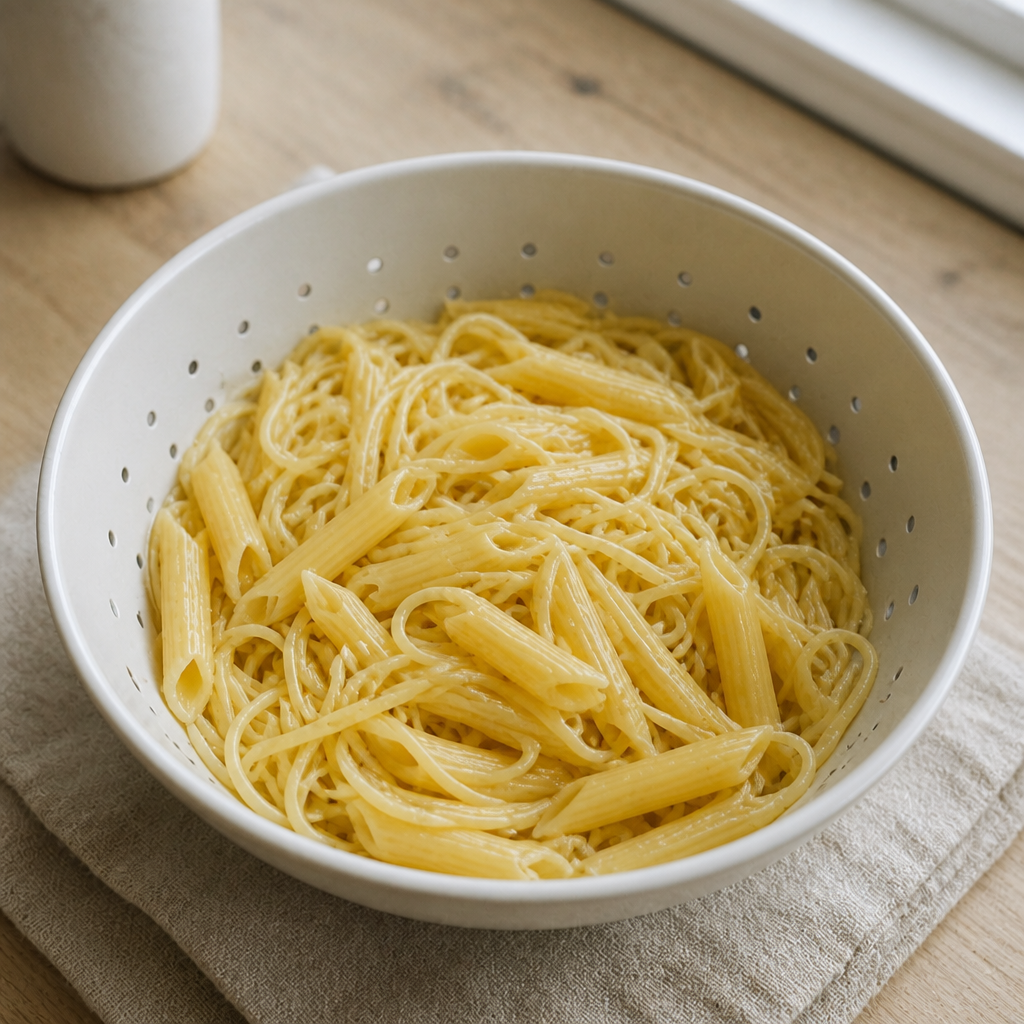
Drained pasta cooked al dente — firm to the bite, not mushy
What you need
- Dry pasta (80–100 g per person)
- Large pot
- Salt (about 10 g per litre of water)
- Colander or pasta spoon
- Spoon for tasting
Step by step
1
Fill a large pot with at least 1 litre of water per 100 g pasta. Bring to a rolling boil. Add about 10 g salt per litre and stir.
- Equipment: Large pot.
- Heat: High heat to a rolling boil.
- Time: 5–10 minutes depending on volume.
- Looks like: Water is at a rolling boil; taste is clearly salty like mild seawater.
- If it goes wrong: Too little water — pasta sticks; use a larger pot or more water.
- Done when: Water is boiling and salted, ready for pasta.
2
Add the pasta to the boiling water. Stir at once so pieces do not stick. Keep the boil going.
- Equipment: Spoon or pasta spoon.
- Heat: High heat so the boil returns quickly.
- Time: First 30–60 seconds with frequent stirring.
- Looks like: Pasta moves freely in the water without clumping.
- If it goes wrong: Pasta sticks on the base — stir more in the first minutes and ensure enough water.
- Done when: Pasta is boiling freely without clumps.
3
Cook for the pack time minus 1 minute. Taste a piece. Stop when the center is firm but not raw. Save ½–1 cup cooking water before draining.
- Equipment: Spoon and colander.
- Heat: Keep a steady rolling boil.
- Time: Typically 7–12 minutes by pasta type.
- Looks like: Cut piece: no white raw core, but still some bite.
- If it goes wrong: Too soft — next time 1–2 minutes less; pasta finishes in the sauce.
- Done when: Pasta is al dente, and cooking water is saved for the sauce.
4
Drain the pasta. Toss at once with sauce or a splash of oil so it does not stick. Use cooking water to bind the sauce.
- Equipment: Colander and bowl or pan for sauce.
- Heat: No further boiling after draining; warm sauce finishes it.
- Time: 1–2 minutes to toss.
- Looks like: Pasta is glossy, separate and mixed with the sauce without clumps.
- If it goes wrong: Pasta sticks in the colander — toss at once; do not rinse unless for a cold salad.
- Done when: Pasta is ready to serve with sauce.
If it doesn't turn out as expected
Sticky pasta
more water, more stirring in the first minutes, and salt the water before the pasta goes in.
Flat taste
undersalted; water should taste like mild seawater (about 10 g salt per litre).
Too soft
stop 1–2 minutes before the pack time and finish in the sauce.
Raw center after the time
packs can lie; taste every minute near the end.
Wrong portion
80–100 g dry pasta per person is a solid starting point.
Food safety
Pour boiling water away from yourself and keep the pot steady when draining.
When it's done: The pasta is cooked through with a lightly firm center — not raw-chewy and not soft.