Apprendre à cuisiner / Riz, pâtes et pommes de terre
Comment cuire les pâtes
Réponse courte
Fais bouillir une grande casserole d'eau salée. Ajoute les pâtes, remue, cuis selon le paquet moins 1–2 minutes, goûte, égoutte.
Valable quand
- Portion: 80–100 g dry pasta per person (more for very hungry eaters or cold pasta salad).
- At least 1 litre of water per 100 g pasta so starch dilutes.
- Salt: about 10 g per litre (about 1 tbsp coarse salt per litre) — water should taste like mild seawater.
- Al dente means a firm center without a white, raw core.
À quoi ça doit ressembler
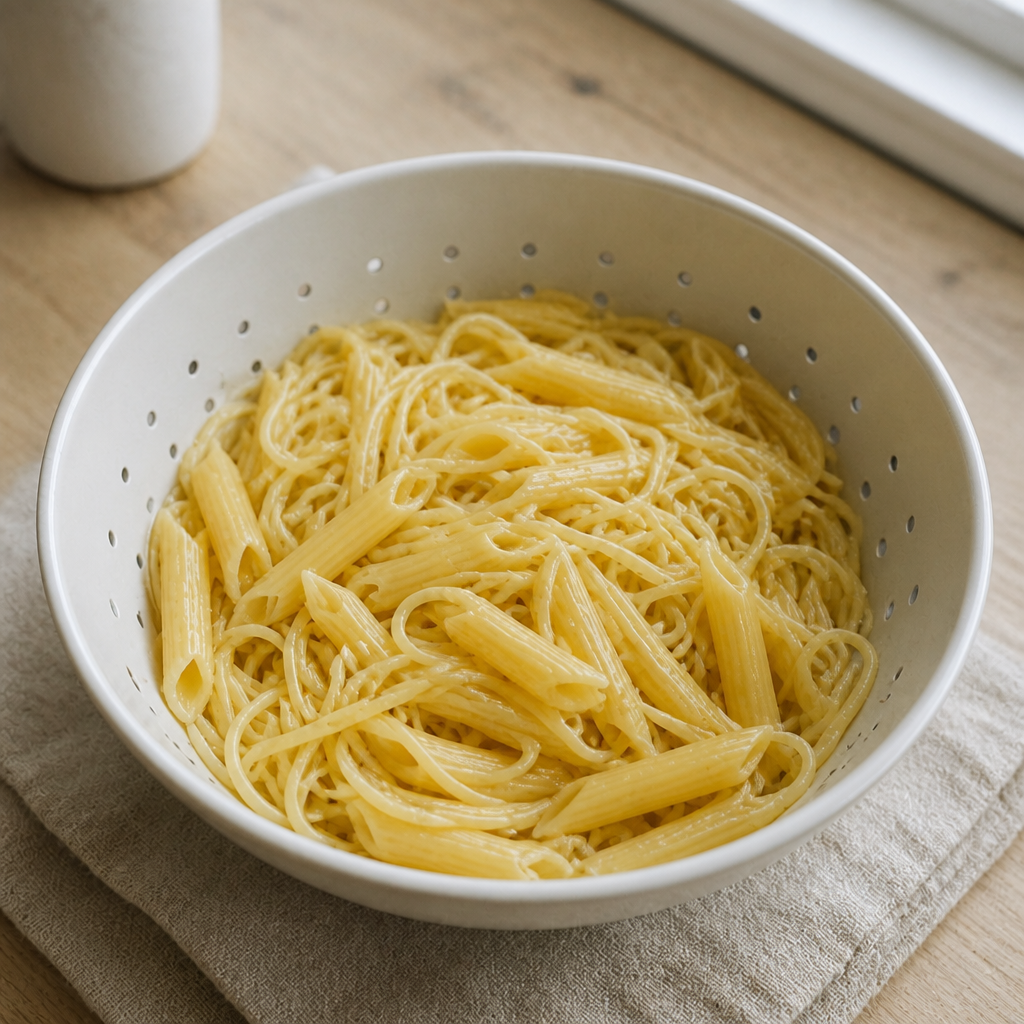
Drained pasta cooked al dente — firm to the bite, not mushy
Ce qu'il te faut
- Dry pasta (80–100 g per person)
- Large pot
- Salt (about 10 g per litre of water)
- Colander or pasta spoon
- Spoon for tasting
Étape par étape
1
Fill a large pot with at least 1 litre of water per 100 g pasta. Bring to a rolling boil. Add about 10 g salt per litre and stir.
- Matériel: Large pot.
- Chaleur: High heat to a rolling boil.
- Temps: 5–10 minutes depending on volume.
- Aspect: Water is at a rolling boil; taste is clearly salty like mild seawater.
- Si ça tourne mal: Too little water — pasta sticks; use a larger pot or more water.
- Prêt quand: Water is boiling and salted, ready for pasta.
2
Add the pasta to the boiling water. Stir at once so pieces do not stick. Keep the boil going.
- Matériel: Spoon or pasta spoon.
- Chaleur: High heat so the boil returns quickly.
- Temps: First 30–60 seconds with frequent stirring.
- Aspect: Pasta moves freely in the water without clumping.
- Si ça tourne mal: Pasta sticks on the base — stir more in the first minutes and ensure enough water.
- Prêt quand: Pasta is boiling freely without clumps.
3
Cook for the pack time minus 1 minute. Taste a piece. Stop when the center is firm but not raw. Save ½–1 cup cooking water before draining.
- Matériel: Spoon and colander.
- Chaleur: Keep a steady rolling boil.
- Temps: Typically 7–12 minutes by pasta type.
- Aspect: Cut piece: no white raw core, but still some bite.
- Si ça tourne mal: Too soft — next time 1–2 minutes less; pasta finishes in the sauce.
- Prêt quand: Pasta is al dente, and cooking water is saved for the sauce.
4
Drain the pasta. Toss at once with sauce or a splash of oil so it does not stick. Use cooking water to bind the sauce.
- Matériel: Colander and bowl or pan for sauce.
- Chaleur: No further boiling after draining; warm sauce finishes it.
- Temps: 1–2 minutes to toss.
- Aspect: Pasta is glossy, separate and mixed with the sauce without clumps.
- Si ça tourne mal: Pasta sticks in the colander — toss at once; do not rinse unless for a cold salad.
- Prêt quand: Pasta is ready to serve with sauce.
Si ce n'est pas comme prévu
Sticky pasta
more water, more stirring in the first minutes, and salt the water before the pasta goes in.
Flat taste
undersalted; water should taste like mild seawater (about 10 g salt per litre).
Too soft
stop 1–2 minutes before the pack time and finish in the sauce.
Raw center after the time
packs can lie; taste every minute near the end.
Wrong portion
80–100 g dry pasta per person is a solid starting point.
Sécurité alimentaire
Attention à l'eau bouillante et à la vapeur en égouttant. Utilise une passoire stable.
C'est prêt quand: Les pâtes sont chaudes à cœur avec une légère résistance au centre — pas farineuses, pas molles.