How to fry an egg
Quick answer
Heat 1 tbsp butter or oil over medium-low heat. Crack in the egg and cook 2–4 minutes until the white is set. Cover the pan 30–60 seconds if you want a firmer yolk.
These steps assume
- The egg is fridge-cold or room temperature — timing is similar at medium-low heat.
- The pan is 20–24 cm so the egg does not spread into a thin sheet.
- The goal is one fried egg with a set white; the yolk may be soft or firm.
- Fat covers the pan base before the egg goes in.
This is what it should look like
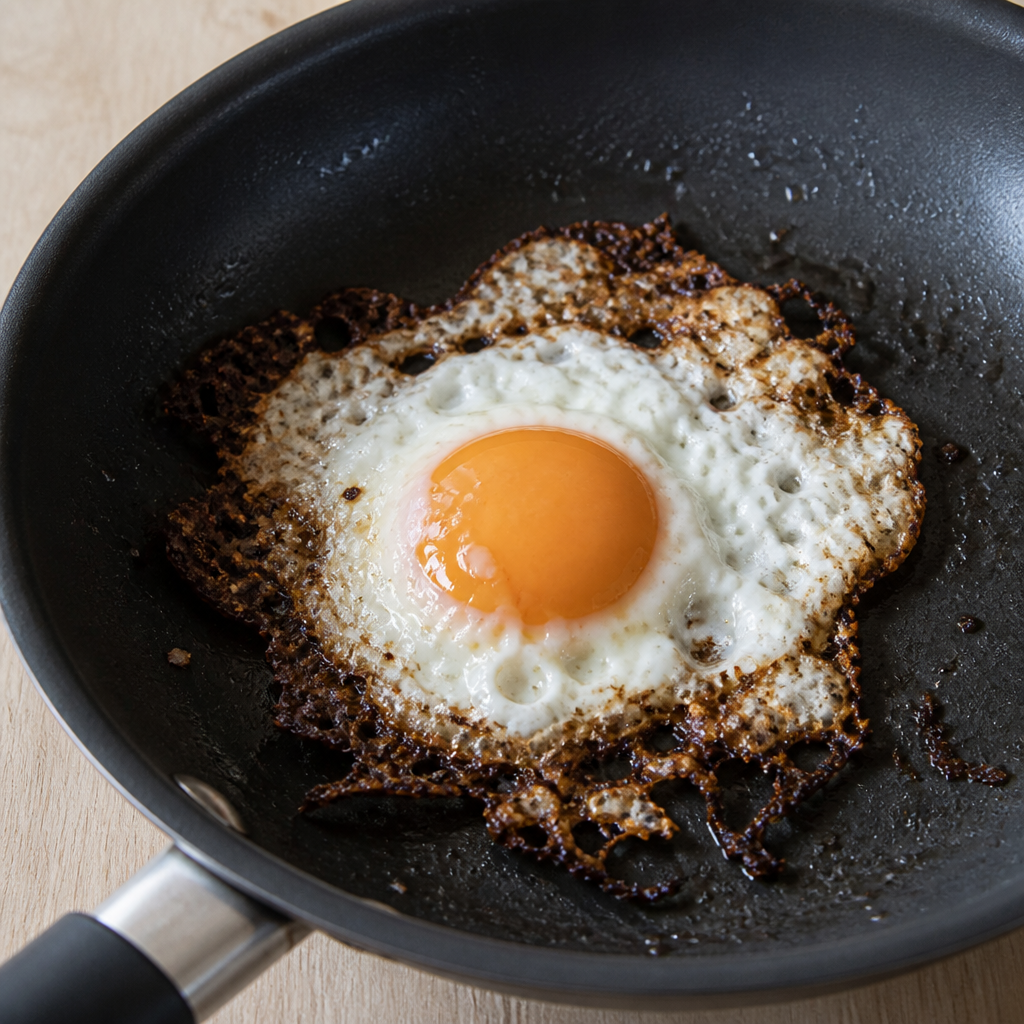
Fried egg with brown, crisp burnt edges from heat that was too high
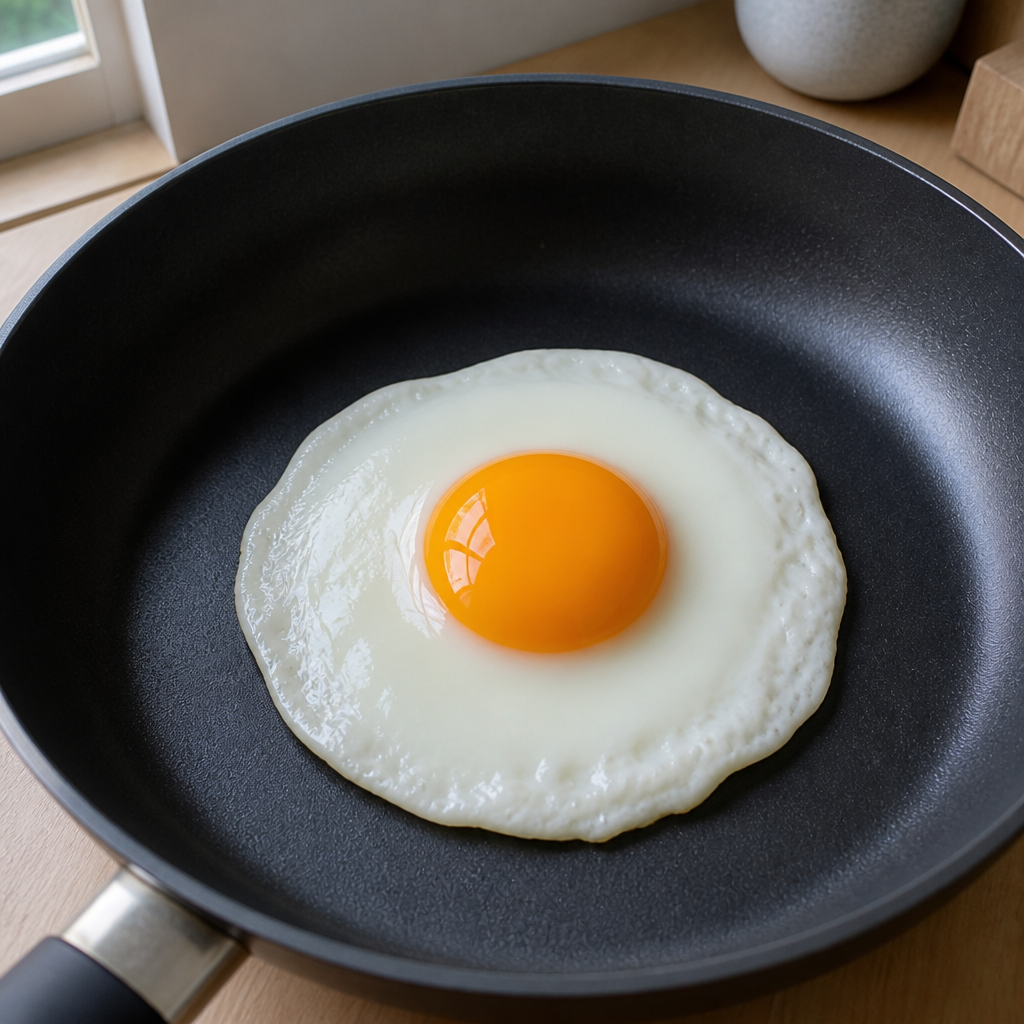
Fried egg with set white and glossy soft yolk — no burnt edges
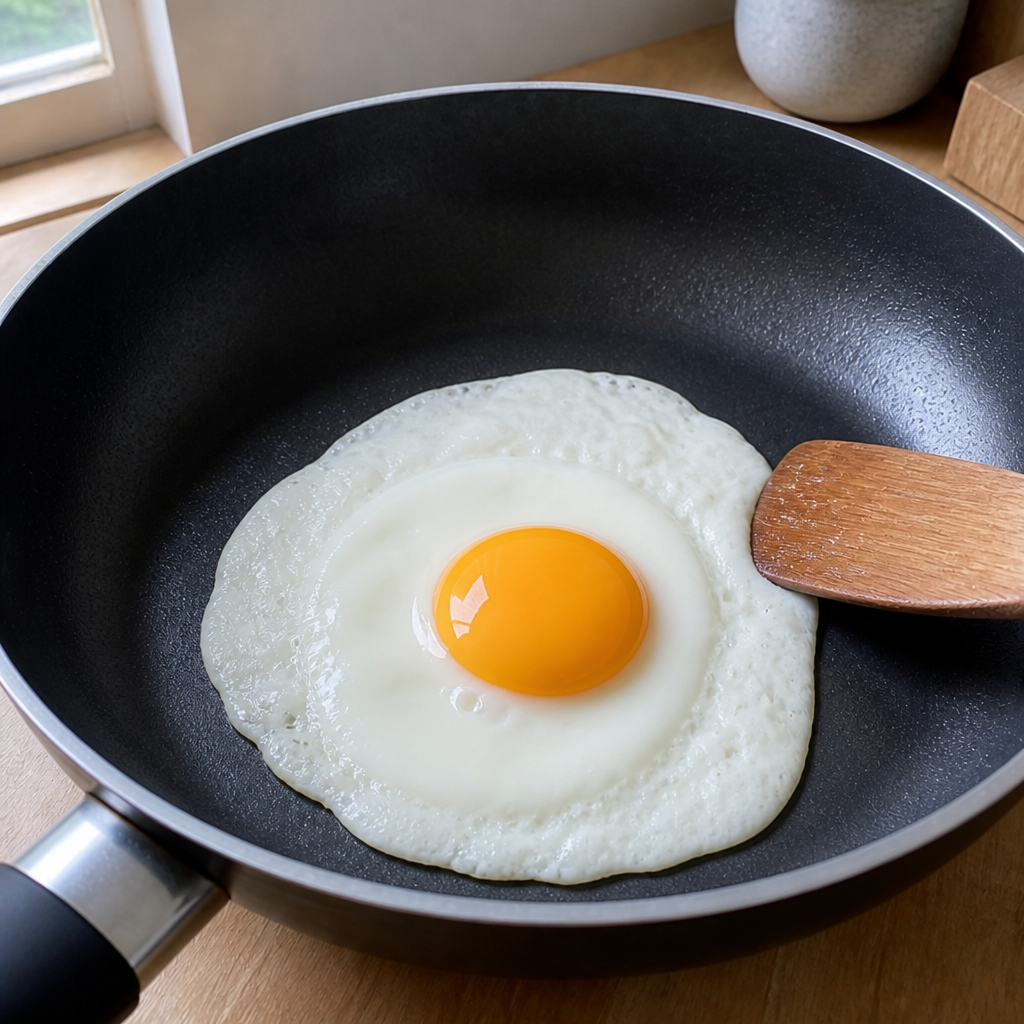
Egg in the pan with fully set white and still-soft yolk
What you need
- 1 fresh egg
- 1 tbsp butter or oil
- 20–24 cm frying pan
- Spatula
- Lid (optional for a firmer yolk)
Step by step
1
Heat 1 tbsp butter or oil in the pan and spread the fat across the base.
- Equipment: 20–24 cm frying pan.
- Heat: Medium-low heat.
- Time: 30–60 seconds.
- Looks like: Butter foams gently or oil shimmers; the fat is not smoking.
- If it goes wrong: Smoke or browned butter — remove the pan, wipe it out and restart over lower heat.
- Done when: The fat is hot and evenly spread without smoking.
2
Crack the egg into a small bowl, then tip it gently into the centre of the pan close to the surface.
- Equipment: Small bowl and spatula.
- Heat: Keep medium-low heat.
- Time: Under 30 seconds.
- Looks like: The white gathers around the yolk; no brown bubbles form at the edges immediately.
- If it goes wrong: The white spreads into thin frills — lower the heat slightly and gently nudge the white toward the centre with the spatula.
- Done when: The egg sits gathered in the pan with an intact yolk.
3
Leave the egg undisturbed until the white is set. Optionally baste a little fat over the thin white nearest the yolk.
- Equipment: Spatula.
- Heat: Medium-low heat throughout.
- Time: 2–4 minutes.
- Looks like: The white is opaque and firm when lightly poked; edges are white, not brown.
- If it goes wrong: Edges brown while the centre is still translucent — lower the heat immediately and briefly cover the pan.
- Done when: The white is set; the yolk is still soft unless you continue.
4
Lift the egg for a soft yolk, or cover the pan 30–60 seconds until the yolk surface is lightly set.
- Equipment: Lid and spatula.
- Heat: Low to medium-low heat under the lid.
- Time: 0–60 extra seconds.
- Looks like: Soft yolk: glossy and runny. Firm yolk: the surface is matte and yields without running.
- If it goes wrong: Yolk is rubbery-hard — next time lift earlier; steam under a lid sets the yolk quickly.
- Done when: The fried egg has a set white and the chosen yolk consistency without burnt edges.
If it doesn't turn out as expected
Brown, crisp edges with raw white in the middle
lower the heat and briefly cover the pan.
White spreads into a thin sheet
use a smaller pan or more fat.
Yolk breaks on cracking
crack into a bowl first, then tip gently.
Egg sticks
wait until the white is set before lifting; use a little more fat next time.
Food safety
Use fresh eggs. For children, pregnant people and older adults: cook until the yolk is fully firm.
When it's done: The white is fully opaque and set with no translucent patches; the yolk is soft or firm as you prefer, with no burnt edges.