Eggs
Yolk firmness depends on egg size, starting temperature and cooking time. Here is the full method for boiling them — with S/M/L times and visible results.
Quick answer
Choose egg size (S/M/L) — soft, jammy and hard times update. An ice bath afterwards stops the cooking.
Choose egg size
- Soft-boiled5 min
- Jammy7 min
- Hard-boiled9–10 min
These steps assume
- Eggs are fridge-cold.
- The water is already boiling when the eggs go in.
- The timer starts when bubbles are small and steady again — not at a violent rolling boil.
Cooking times
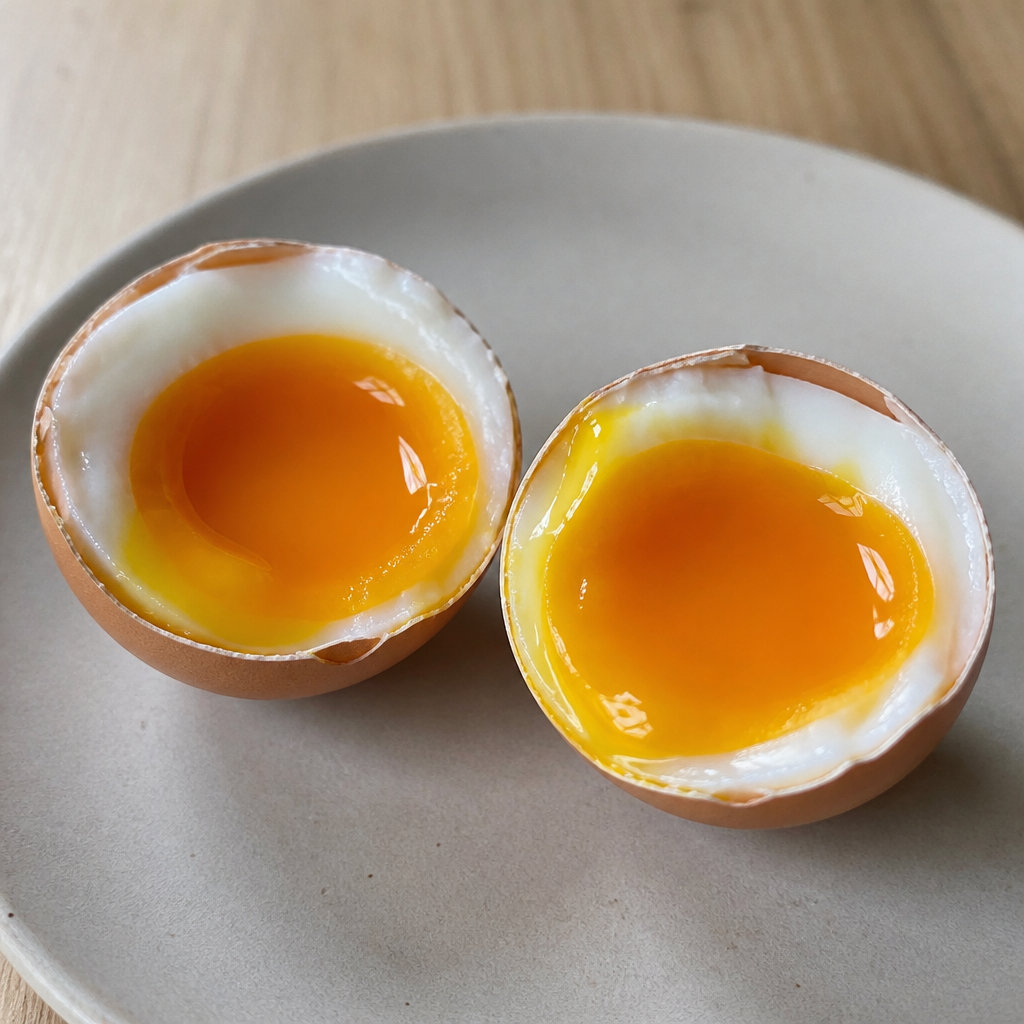
Soft-boiled
5 min
Time for selected size · M
White is set; yolk is runny.
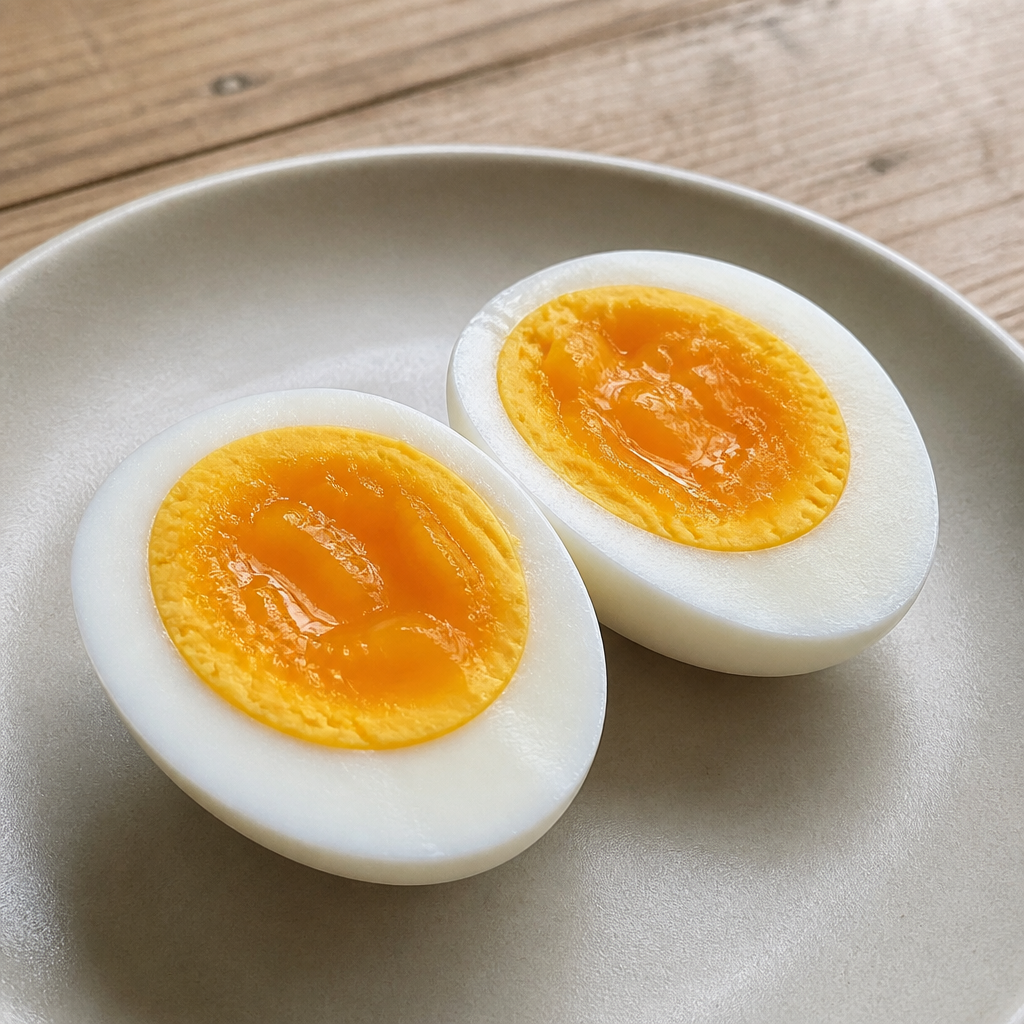
Jammy
7 min
Time for selected size · M
Outer yolk creamy; centre still soft.
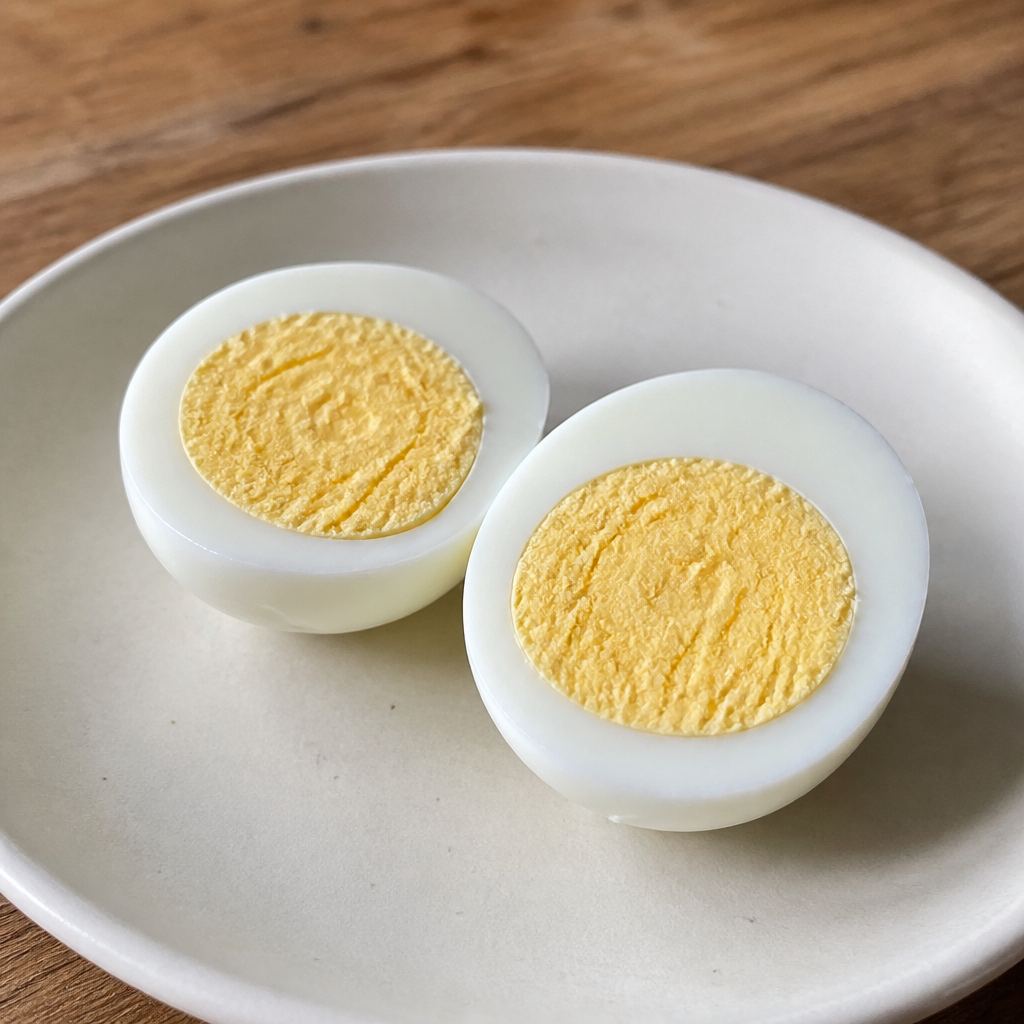
Hard-boiled
9–10 min
Time for selected size · M
Yolk evenly firm with no raw centre.
| Result | S | M | L |
|---|---|---|---|
| Soft-boiled | 4½ min | 5 min | 6 min |
| Jammy | 6 min | 7 min | 8½ min |
| Hard-boiled | 8½ min | 9–10 min | 11–12 min |
Approximate. Calibrate to your hob the first time — egg size and heat change the result more than the stopwatch alone.
What you need
- Eggs of known size (S, M or L) from the fridge
- Pan with enough water to cover the eggs
- Spoon to lower the eggs gently
- Timer
- Bowl of ice-cold water (ice if you have it)
Step by step
1
Check egg size (S, M or L). Take the eggs from the fridge. Fill the pan with enough water to cover them.
- Equipment: Pan, spoon, timer, bowl of ice-cold water.
- Done when: Eggs and water are ready; size is known.
2
Bring the water to a boil. Lower the eggs in gently with a spoon. When small steady bubbles return, start the timer from the table for your result and size.
- Heat: High heat until boiling; then lower so bubbles stay small and steady.
- Time: See the S/M/L table for your choice.
- Looks like: Water keeps small bubbles; eggs stay submerged.
- If it goes wrong: If a shell cracks: lower the heat and continue.
- Done when: The timer for your chosen result has finished.
3
Lift the eggs out and put them straight into ice-cold water for at least 1 minute.
- Looks like: Shell feels cool; cooking has stopped.
- Done when: The egg matches your choice — compare with the photos.
If it doesn't turn out as expected
Shell cracks
lower the heat so bubbles stay small and steady, not violent.
Yolk too firm
next time use a shorter time in the S/M/L table, or a smaller egg.
Green ring around the yolk
overcooked or no ice bath; cool immediately after cooking.
Hard to peel
very fresh eggs; an ice bath and a short rest help.
Food safety
Soft and jammy yolks are not fully set. Pregnant people, young children, older adults and anyone with a weakened immune system should choose hard-boiled eggs or follow local guidance.
When it's done: The yolk matches the result you chose — and the eggs are cooled so cooking has stopped.
Methods
- How to fry an egg
A fried egg with set white and a soft or firm yolk — without burnt edges.
- How to make soft scrambled eggs
Soft, creamy scrambled eggs without dry curds — low heat and constant movement.
- How to make an omelette
A soft, folded omelette without a burnt underside — correct pan heat and a quick fold.