Learn to cook / Outdoor cooking skills
Outdoor heat, wind and flame
Quick answer
Shield crosswind without enclosing the burner. Keep the flame steady and blue, move the pot if heat runs away, and extinguish before moving or refueling.
These steps assume
- Equipment stands securely on a non-combustible surface.
- Wind and fuel can change conditions during the process.
- The focus is “Outdoor heat, wind and flame,” not a particular dish.
This is what it should look like
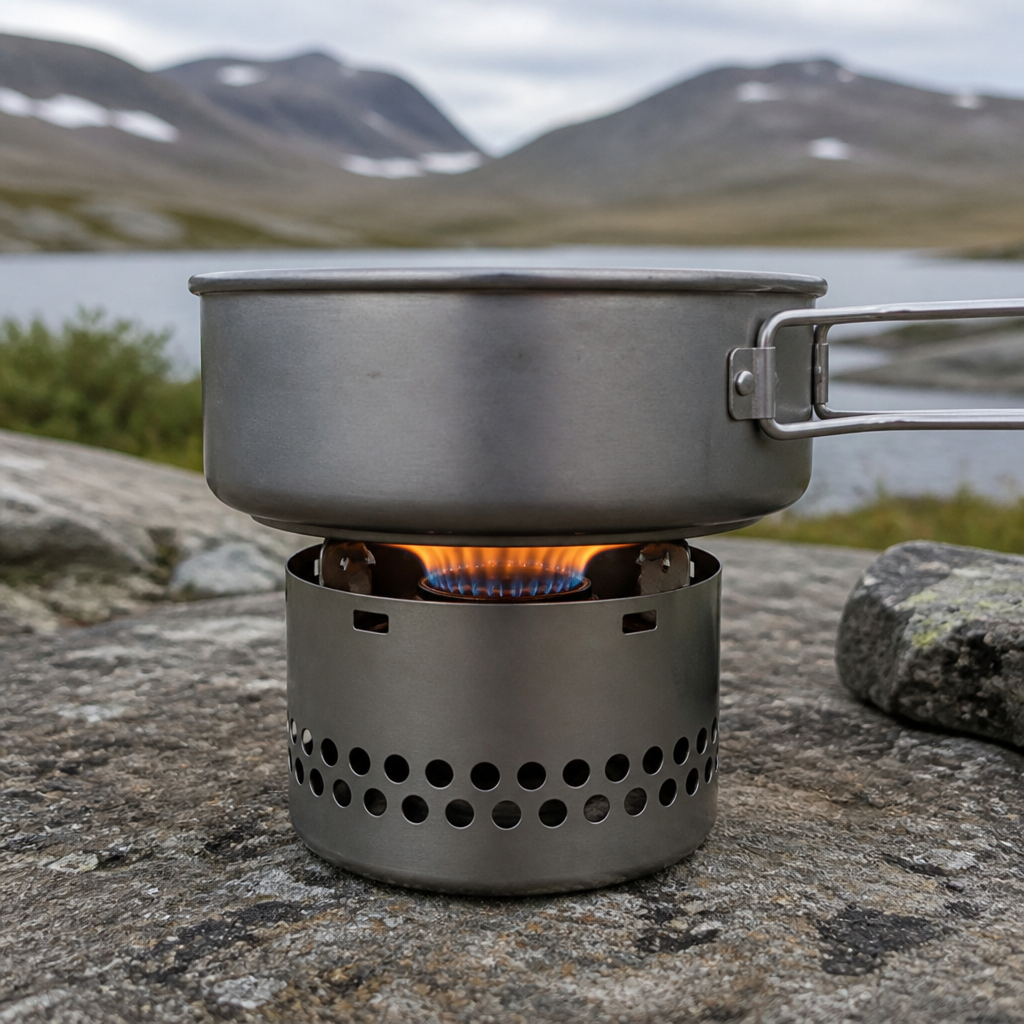
Outdoor stove with a controlled steady flame in calm air
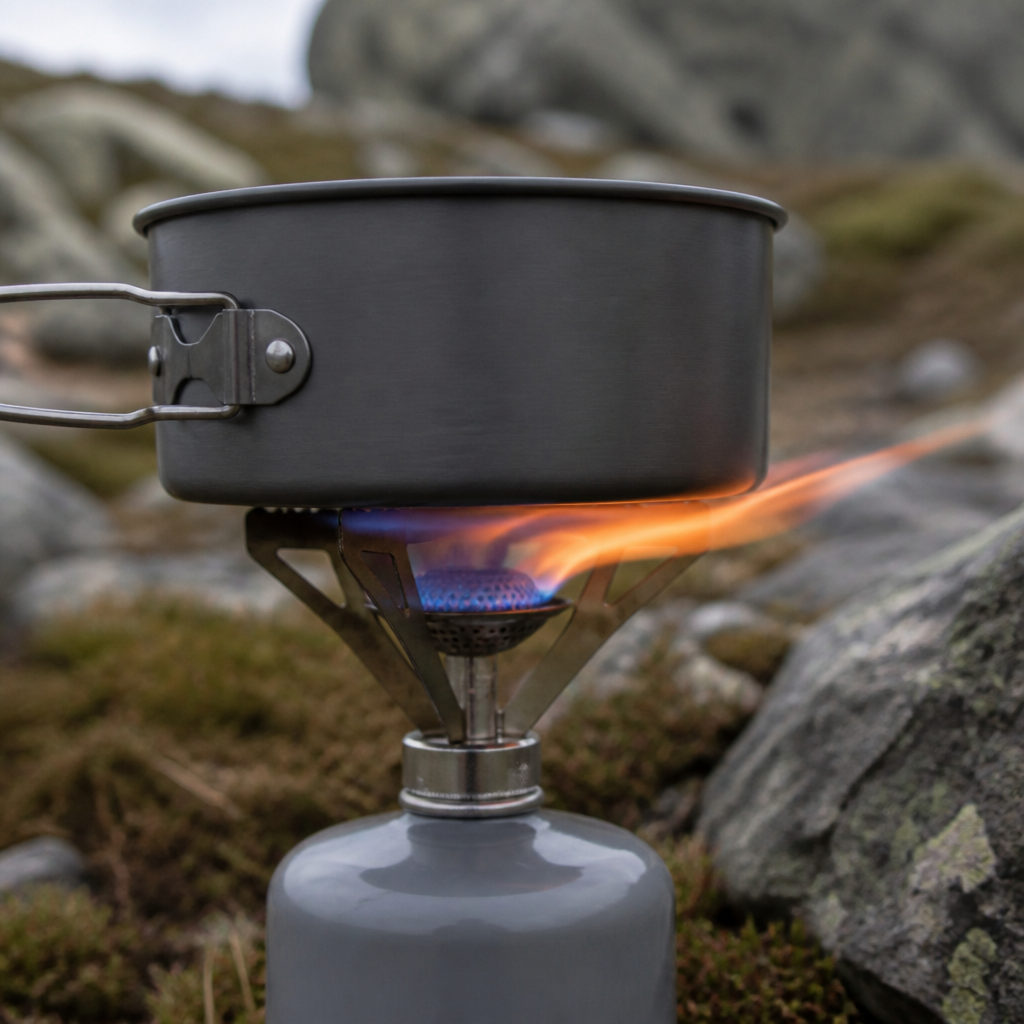
Outdoor flame blown sideways by wind — uneven heat
What you need
- Trangia with windshield
- Burner and suitable fuel
- Stable non-combustible base
- Lid and pot grip
- Water for extinguishing or cooling
Step by step
1
Set the stove level and turn the windshield opening away from crosswind.
- Equipment: Trangia with windshield, Burner and suitable fuel.
- Heat: Medium heat; adjust for wind.
- Time: 3–5 minutes.
- Looks like: The stove is stable and air can still reach the burner.
- If it goes wrong: A fully enclosed windshield traps heat and fumes.
- Done when: Complete: The stove is stable and air can still reach the burner.
2
Light, place the pot, and adjust by the flame sound and contact with the base.
- Equipment: Trangia with windshield, Burner and suitable fuel.
- Heat: Medium heat; adjust for wind.
- Time: 3–5 minutes.
- Looks like: The flame stays steady under the base, not licking up the sides.
- If it goes wrong: A yellow, fluttering flame needs more shelter or lower output.
- Done when: Complete: The flame stays steady under the base, not licking up the sides.
3
Extinguish fully, let the burner cool, and check it before moving or refueling.
- Equipment: Trangia with windshield, Burner and suitable fuel.
- Heat: No heat.
- Time: 3–5 minutes.
- Looks like: No flame, glow, sizzling, or fuel vapor.
- If it goes wrong: Refueling a warm burner can cause sudden ignition.
- Done when: Complete: No flame, glow, sizzling, or fuel vapor.
If it doesn't turn out as expected
- A fully enclosed windshield traps heat and fumes.
- A yellow, fluttering flame needs more shelter or lower output.
- Refueling a warm burner can cause sudden ignition.
Food safety
Never use liquid fuel in a tent or enclosed space. Never refill a warm or lit burner.
When it's done: No flame, glow, sizzling, or fuel vapor.