How to make an omelette
Quick answer
Whisk 2–3 eggs with salt. Cook in 1 tbsp butter in a 20–24 cm pan over medium heat for 1–2 minutes until the underside is set. Fold while the centre is still soft and slide onto the plate.
These steps assume
- 2–3 eggs go in a 20–24 cm pan so the egg forms a thin sheet.
- Filling is optional and warm; too much filling makes folding impossible.
- Heat is medium — not smoking, not too low.
- The omelette folds while the centre is still soft; residual heat finishes the set.
This is what it should look like
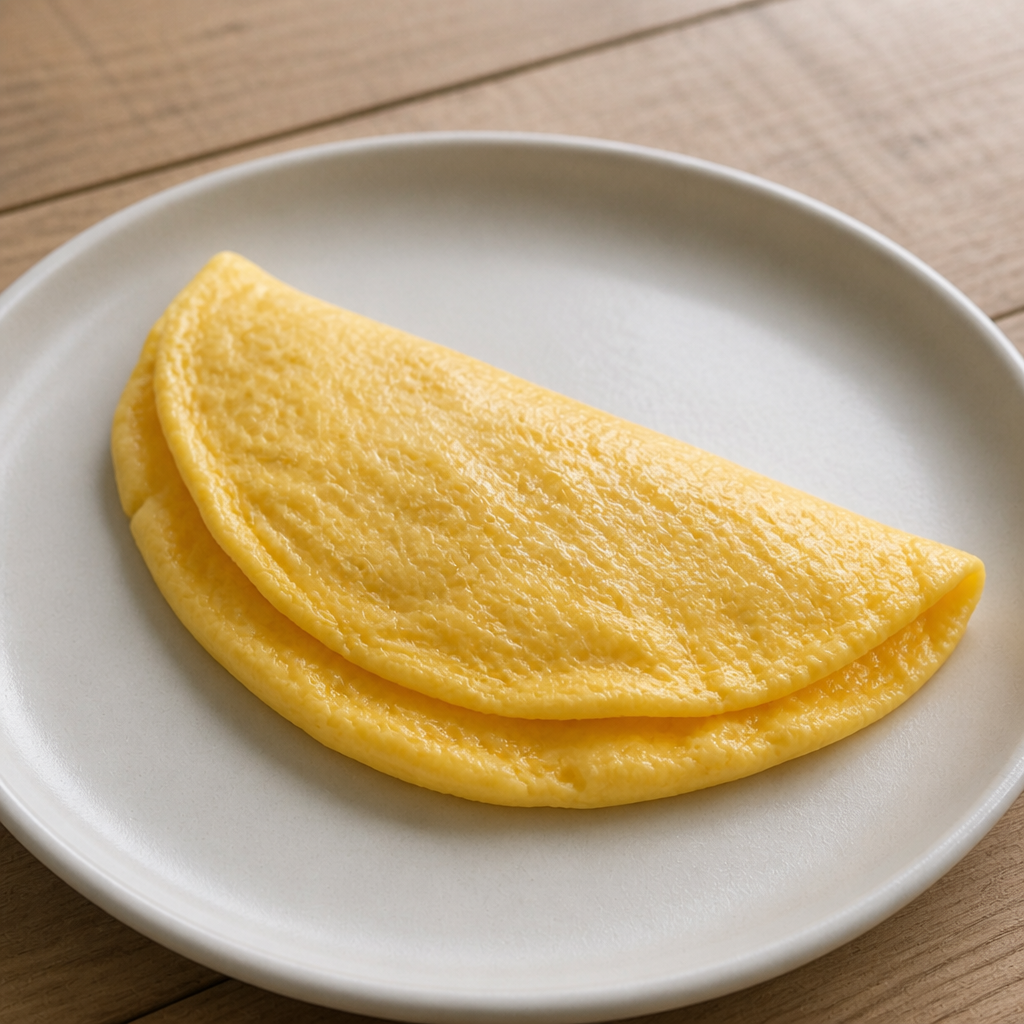
Folded omelette, soft inside, lightly golden underneath
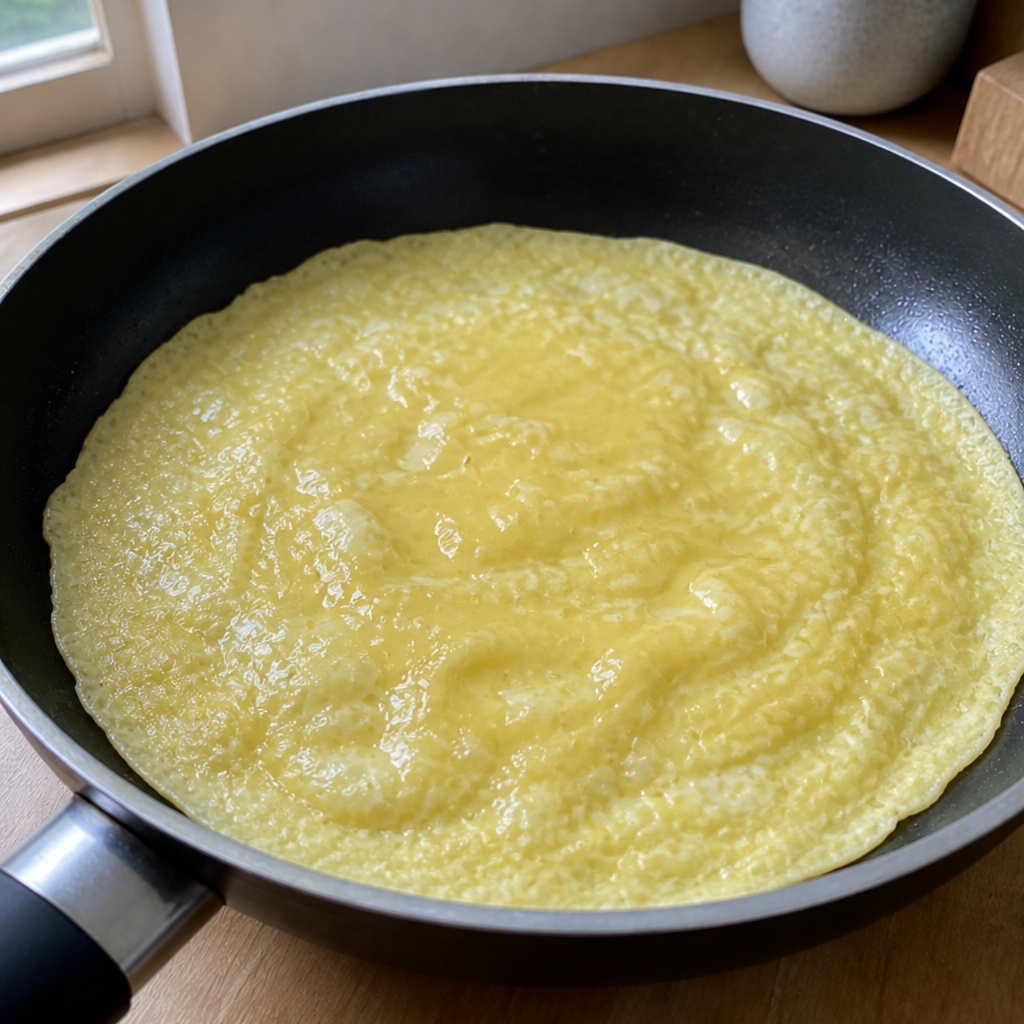
Omelette sheet in the pan with set underside and glossy soft top
What you need
- 2–3 fresh eggs
- 1 tbsp butter
- Salt
- 20–24 cm frying pan
- Whisk or fork
- Spatula
- Optional small amount of warm filling
Step by step
1
Whisk the eggs with a pinch of salt until the mixture is even.
- Equipment: Bowl and whisk.
- Heat: No heat.
- Time: 30 seconds.
- Looks like: No clear streaks of white; the mixture is an even yellow.
- If it goes wrong: Unmixed egg — whisk a little more before it goes in the pan.
- Done when: The eggs are whisked and ready.
2
Heat the pan, melt 1 tbsp butter and tilt so the fat coats the base.
- Equipment: 20–24 cm frying pan.
- Heat: Medium heat.
- Time: 30–45 seconds.
- Looks like: Butter foams; the pan is hot but not smoking.
- If it goes wrong: Smoke — remove the pan, lower the heat and restart.
- Done when: The pan is greased and ready for the eggs.
3
Pour in the eggs and gently pull the set edges toward the centre with the spatula so liquid egg runs underneath.
- Equipment: Spatula.
- Heat: Medium heat.
- Time: 1–2 minutes.
- Looks like: The underside is set and lightly golden; the surface is still glossy and soft in the centre.
- If it goes wrong: Underside browns too fast — lower the heat; the centre is still liquid when the underside is dark.
- Done when: The egg sheet is set enough to fold; the centre is still soft.
4
Add any filling to one half. Fold the other half over and slide the omelette onto the plate.
- Equipment: Spatula and plate.
- Heat: Medium or slightly lower for the fold.
- Time: 15–30 seconds.
- Looks like: The fold holds; no raw egg drips out; the centre is warm and soft.
- If it goes wrong: Omelette splits — centre was too wet or filling too heavy; next time wait a moment longer or use less filling.
- Done when: A folded omelette with a soft centre and golden underside.
If it doesn't turn out as expected
Burnt underside and raw centre
lower the heat and fold earlier.
Omelette sticks
use more butter and wait until the underside is set before moving it.
Too thick and dry
too many eggs for the pan, or too long on heat; use a larger pan or fewer eggs.
Filling prevents folding
use less, warm filling on one half only.
Food safety
Use fresh eggs. Make sure the centre is warmly set, especially if serving children or older adults.
When it's done: The omelette is folded, soft inside and golden — not brown — underneath, with no raw egg on the plate.